Dumfries: Ten Nith Bridges Walk
1. Devorgilla Bridge and Old Bridge House
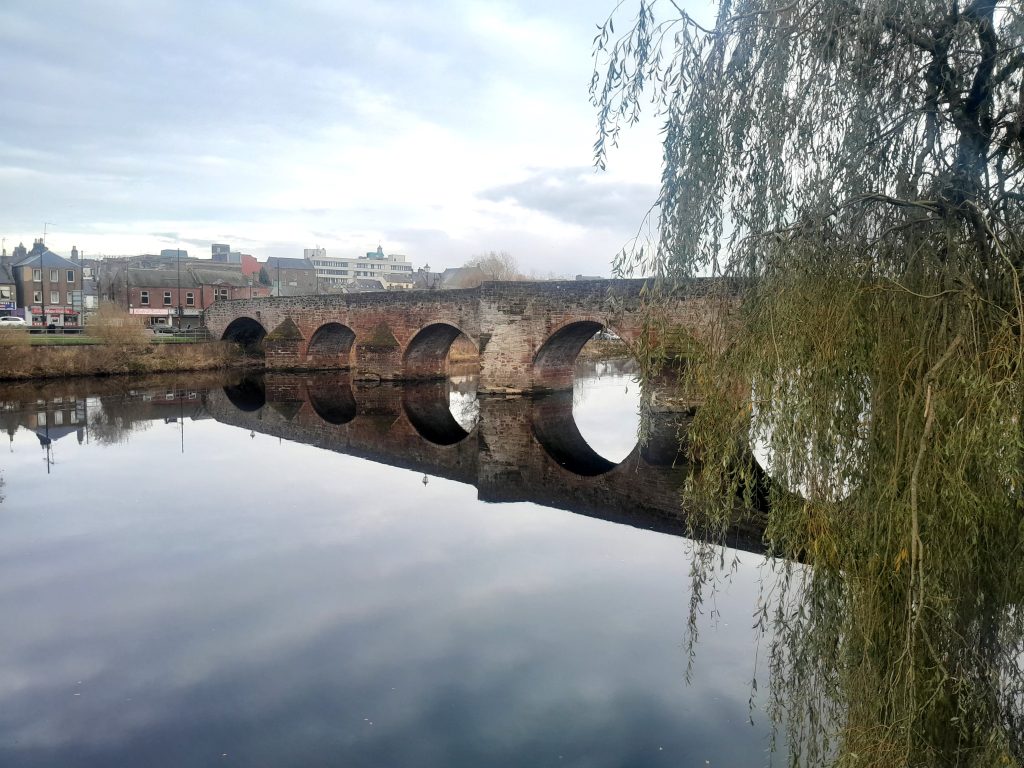
Suggested walking itinerary, or itineraries as the route could easily be split into two strolls, exploring the bridges across the River Nith in Dumfries. A convenient point to start is the ‘Old’ or ‘Devorgilla’ Bridge, the most historic of them all, at the Whitesands right in the centre of town. First constructed in stone c.1430, replacing a wooden predecessor, the bridge here originally had 9 arches – reduced to 6 in rebuilding operations. Over the centuries, these repairs and alterations were required due mainly to damaging episodes of flood for which the river is famous (or infamous). At the western end of the bridge – on the Maxwelltown bank – is the attached Old Bridge House (now a museum) dating from 1660. The name Devorgilla derives from Lady Devorgilla of Galloway (d.1290), mother of King John Balliol and founder of Sweetheart Abbey – a Cistercian house situated into the ancient province of Galloway, across to which her wooden bridge led.
2. Buccleuch Street Bridge
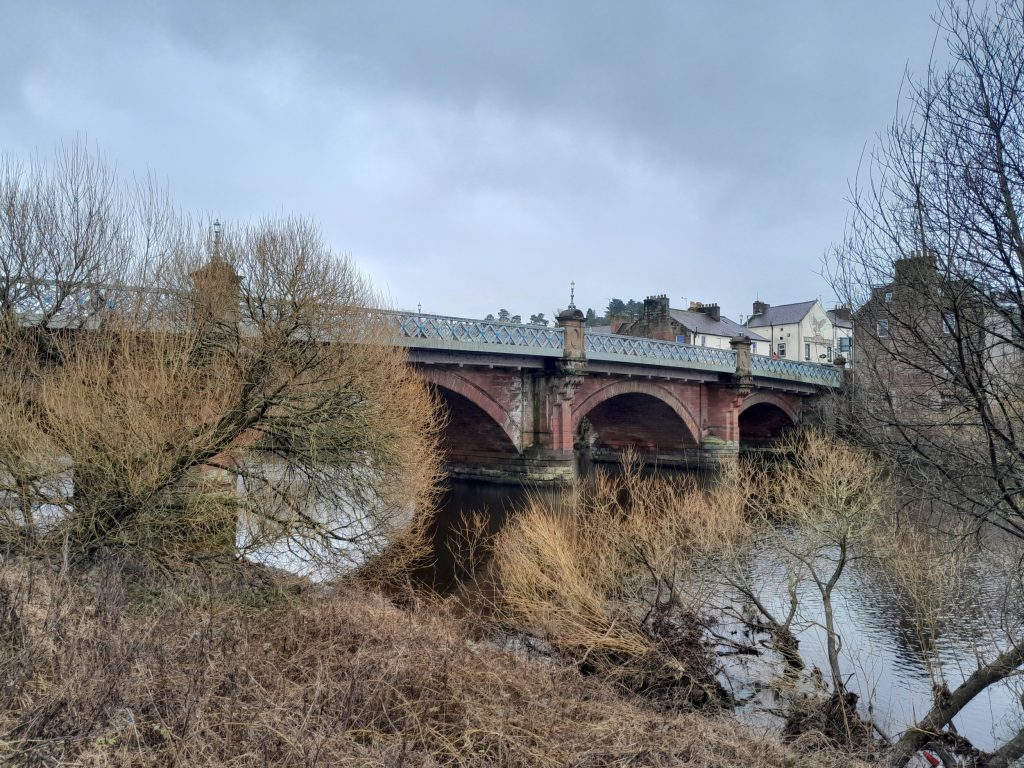
Taking the riverside path, a few hundred yards upstream from the Devorgilla Bridge, we come to the Buccleuch Street Bridge (or ‘New Bridge’ in its early days), constructed in the early 1790s (widened a century later) to facilitate ‘modern’ travel including the developing turnpike road network.
3. Loreburn Footbridge
In passing under the arch of the Buccleuch Bridge, walking up through the vicinity known as the Greensands, we see the Loreburn footbridge as constructed in 2001.

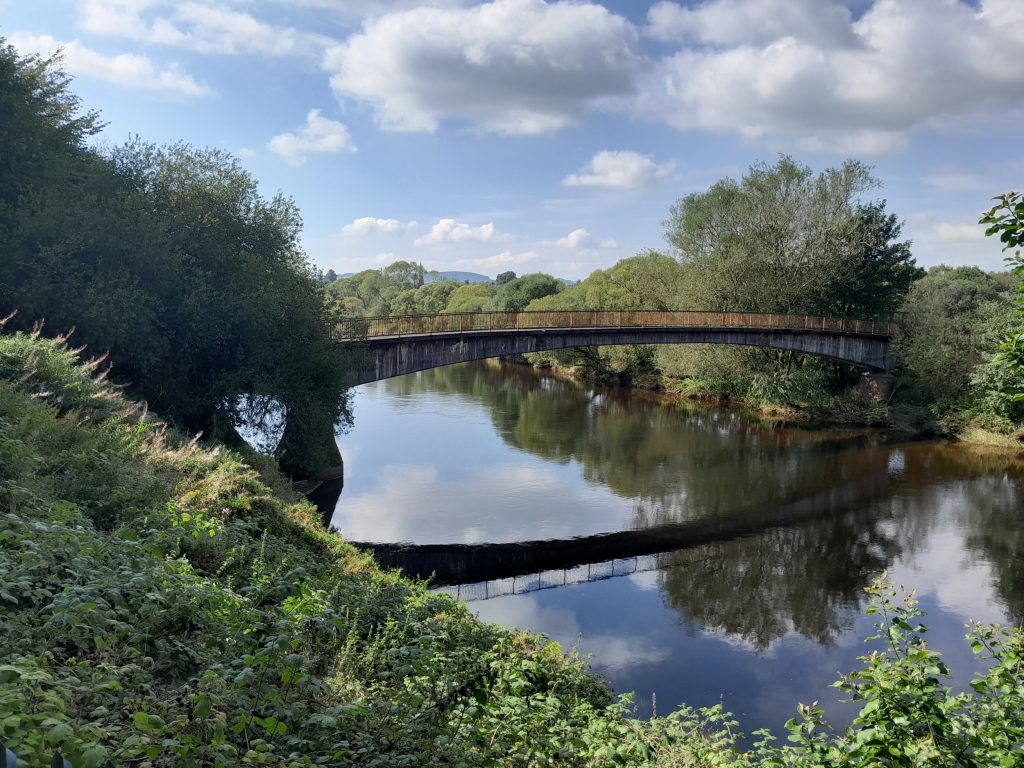
4. Maryholm ‘Academy’ Footbridge
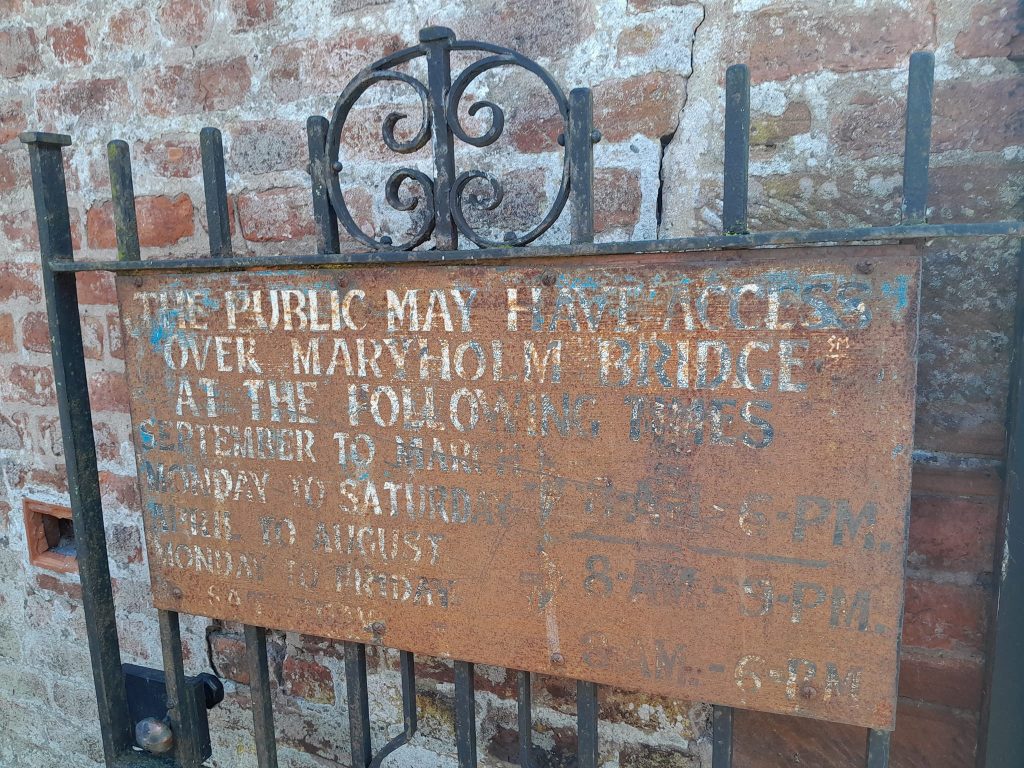
Continuing up the riverside path, now designated Burns Walk, which becomes quite narrow – with no barrier on the Nith’s edge and a wall on the other side – we arrive at the Maryholm, or Academy’, footbridge, built in the 1960s for pupils from the adjacent Dumfries Academy to access playing fields. The image shown was taken from above the line of the path. The other image shows a ‘notice’ at the Academy (on Irving Street) regarding public access to the footbridge – looks to be contemporary with its opening.
5. Nith ‘Queen of the South’ Viaduct
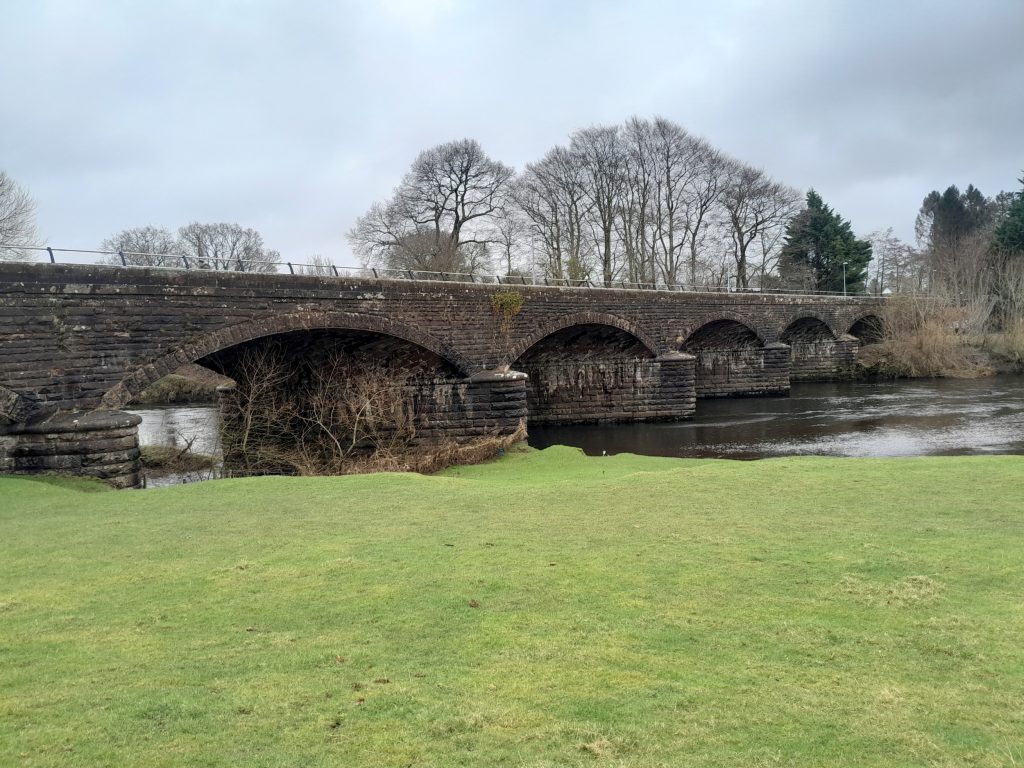
Follow Burns Walk for almost a mile, in admiring the views across the Nith. The path ends at a small area of grass containing a bench. At this point climb a set of steps up onto the start of Nunholm Road. Walk up Nunholm Road (passing the elegant Georgian-era Albany Place on your right) until you arrive at the signposted cycle/walkway crossing of the ‘Queen of the South Viaduct’. This was built in the 1850s as part of the Dumfries to Castle Douglas Railway, and eventually closed to passengers in 1965 (now a ‘lost line’). It was reopened to pedestrians and cyclists in 2006.
Riverbank stroll (& first A75 bridge)
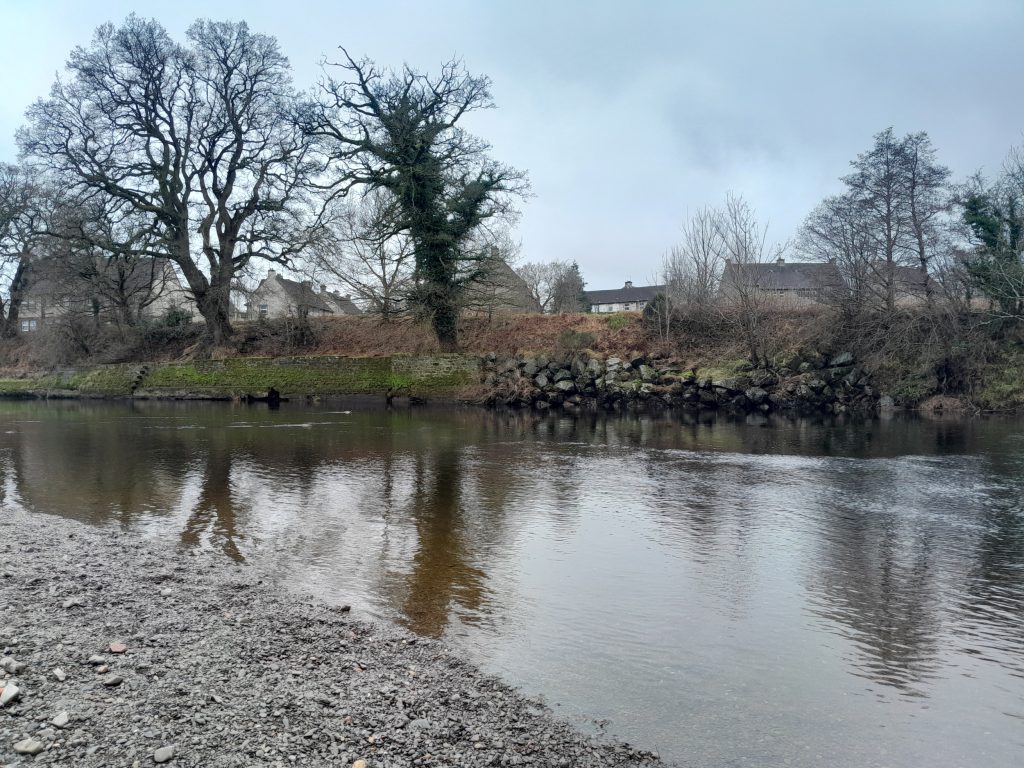
At the viaduct, access the riverbank again, passing under an arch of the structure, then walk up the next stretch of path looking over to Lincluden – with nice views including of the medieval Lincluden Collegiate Church (‘Abbey’). You will soon pass beneath a bridge section of the A75 Bypass. There are three such stretches of the bypass crossing the Nith, and this is the southernmost of the trio. But, not least as they are plain, modern, and almost identical, for the purposes of this blog, we’ll lump them all together as one bridge.

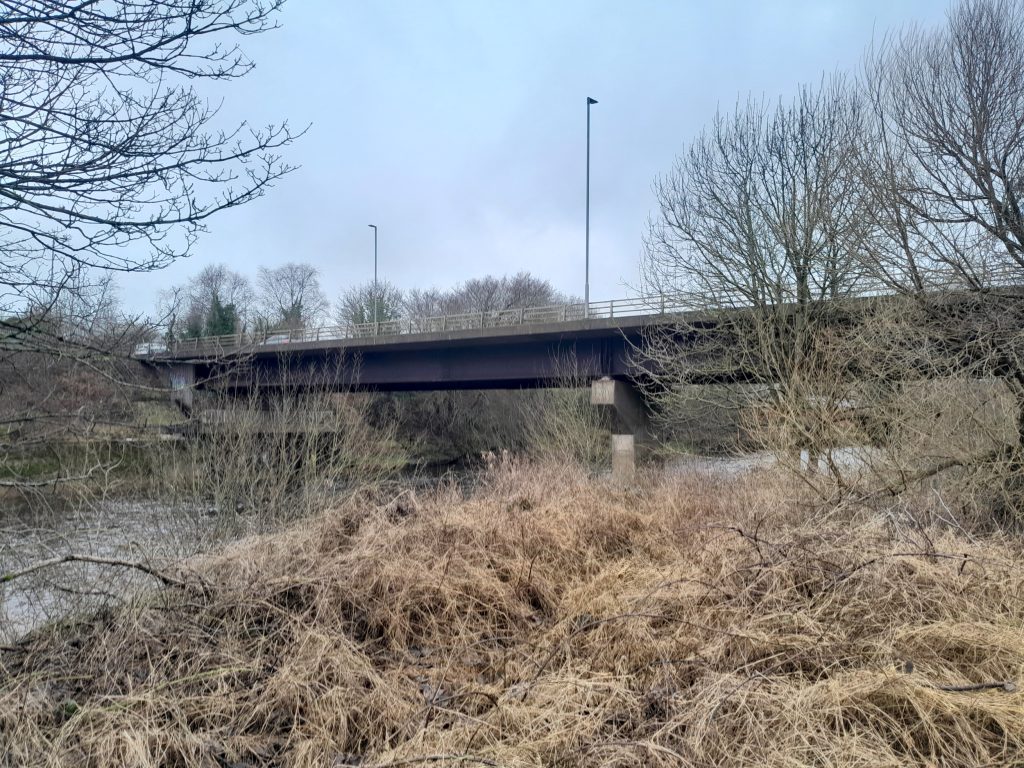
6. A75 Bypass Bridge(s)
A further 5 minutes on, we come to (and again pass under) the second of three bridge portions of the bypass that cross the river. None too pretty, rather noisy (overhead traffic) but very functional.
7. Martinton Railway Viaduct
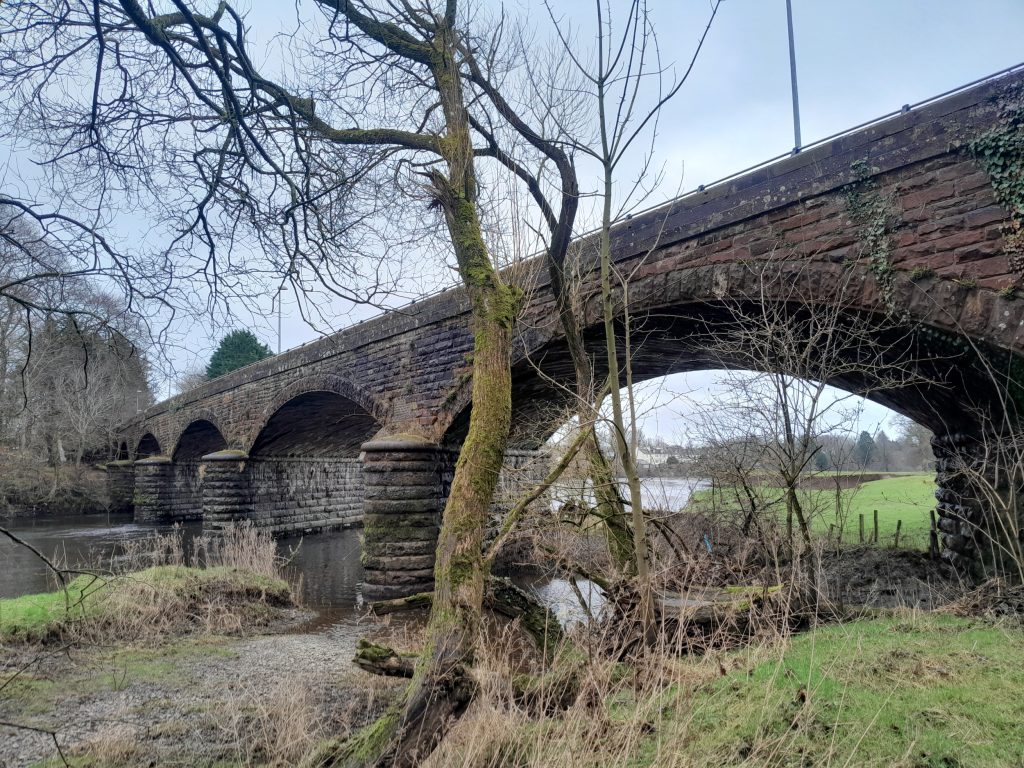
Immediately after the (second) bypass bridge, we arrive at an interesting point where the historic Martinton ford over the Nith once linked an ancient road from Dumfries to the former 13th-century abbey at Holywood (which stood a mile or so north). Traces of the old road exist on the other bank, within trees, then take a recognisable form out into in the Nithsdale countryside. But the most obvious feature here is the still operational Martinton Railway Viaduct, opened in 1849 on what was originally the ‘Glasgow, Dumfries and Carlisle Railway’, and used regularly by Scotrail services from Glasgow to Carlisle today. The riverside path continues under this viaduct, but for our bridge tour we take the track heading south (the former road leading to and from the ford), and back down to the Nith (Queen of the South) Viaduct on Nunholm Road.
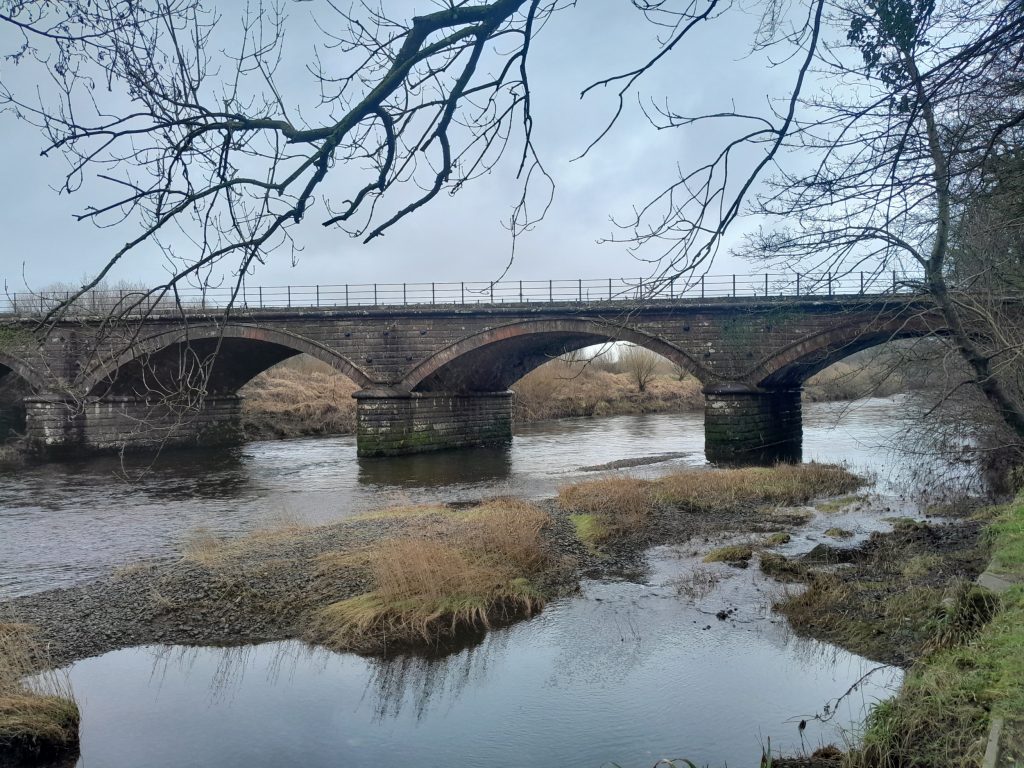
Return route (west bank)
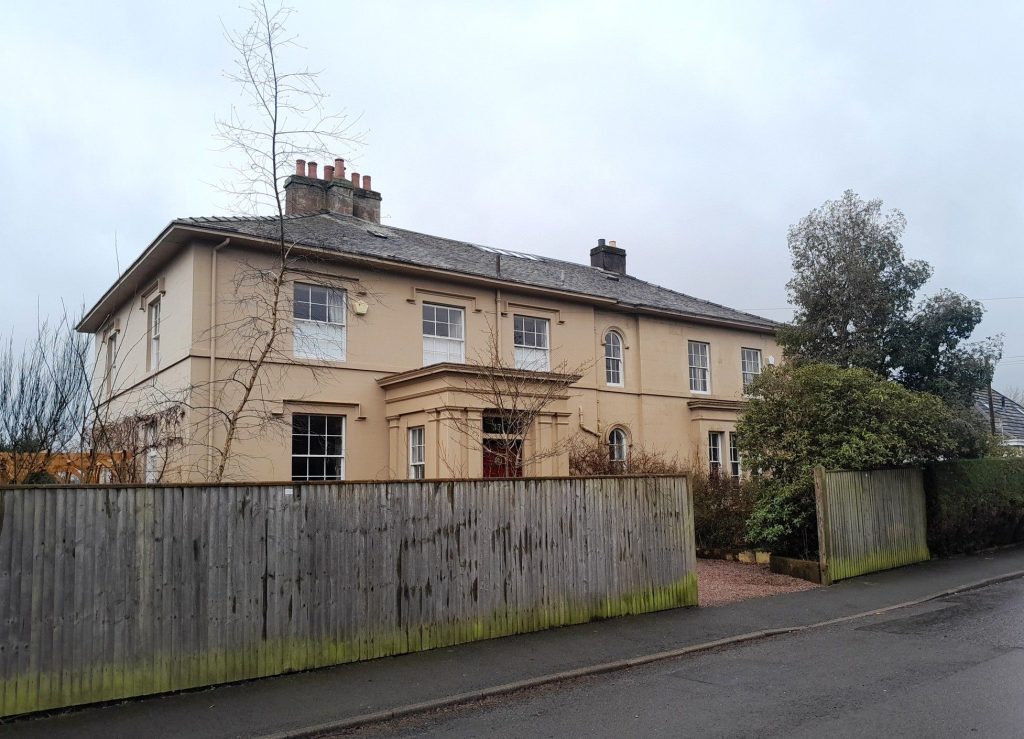
From this point (i.e., the Nith/QotS Viaduct) an option to return to the centre of town and our final three bridges, is to cross the viaduct, go down the steps at the walk signposts at its far end, then pass beneath the arch – through a gate – and walk along the west bank of the river through fields. Be careful if grazing cattle are around. The view across to the mini-Georgian suburb of Albany Place (terrace plus villas) is rewarding, even if my images maybe don’t reflect this (weather was poor when I took these photos). It’s possible to recross the Nith either at the Academy footbridge (if it’s open) or further downstream at the Loreburn footbridge. You may wish, though, to keep to this side, in walking to the right across the field before the Loreburn footbridge, and onto College Road. From here it’s a matter of crossing Galloway Street, immediately at the west end of the Buccleuch Street Bridge, then walking a short distance south on the artery of Market Square and Mill Road, to where we began our itinerary at the Devorgilla Bridge – on this side of which you will find the Old Bridge House Museum as described (open April to September – admission free).

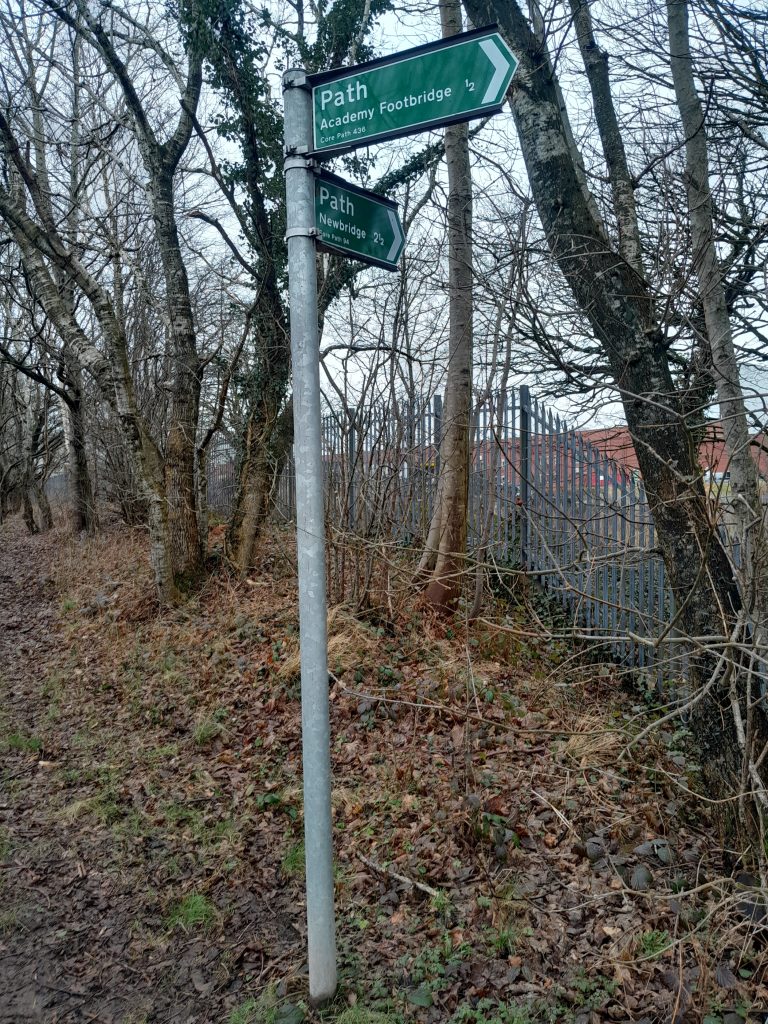
Above: ‘Queen of the South’ Viaduct, walk signposts, start of Academy Footbridge ‘path’
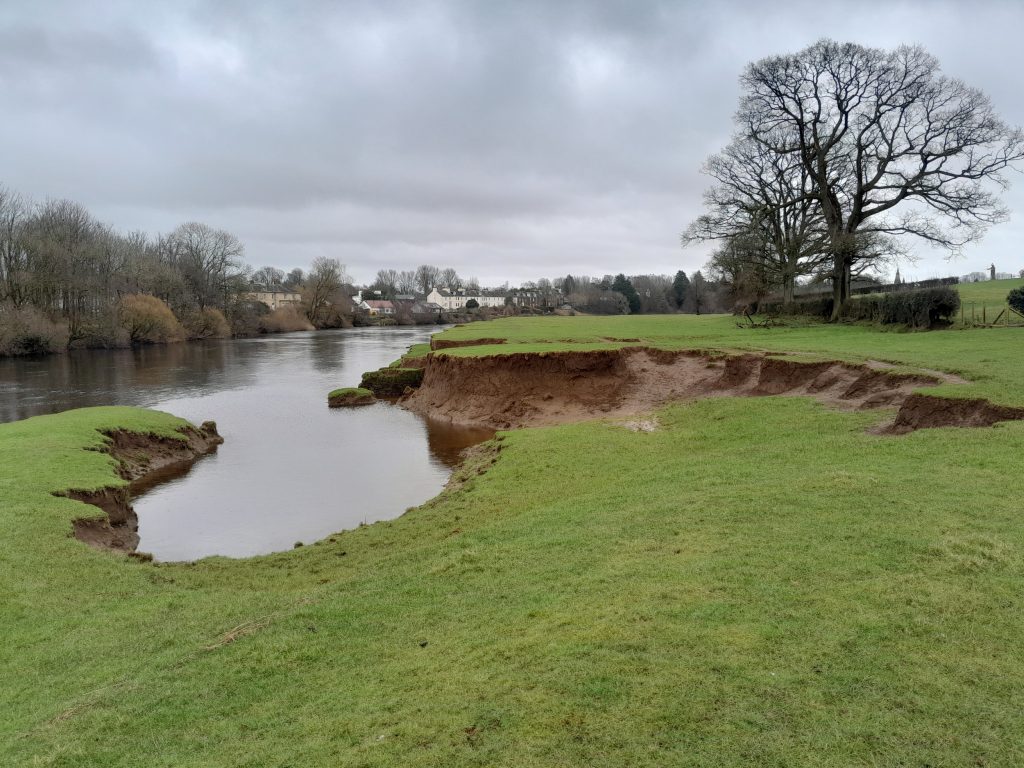

Above: views across the river in taking the Academy Footbridge path (Albany Place in distance)
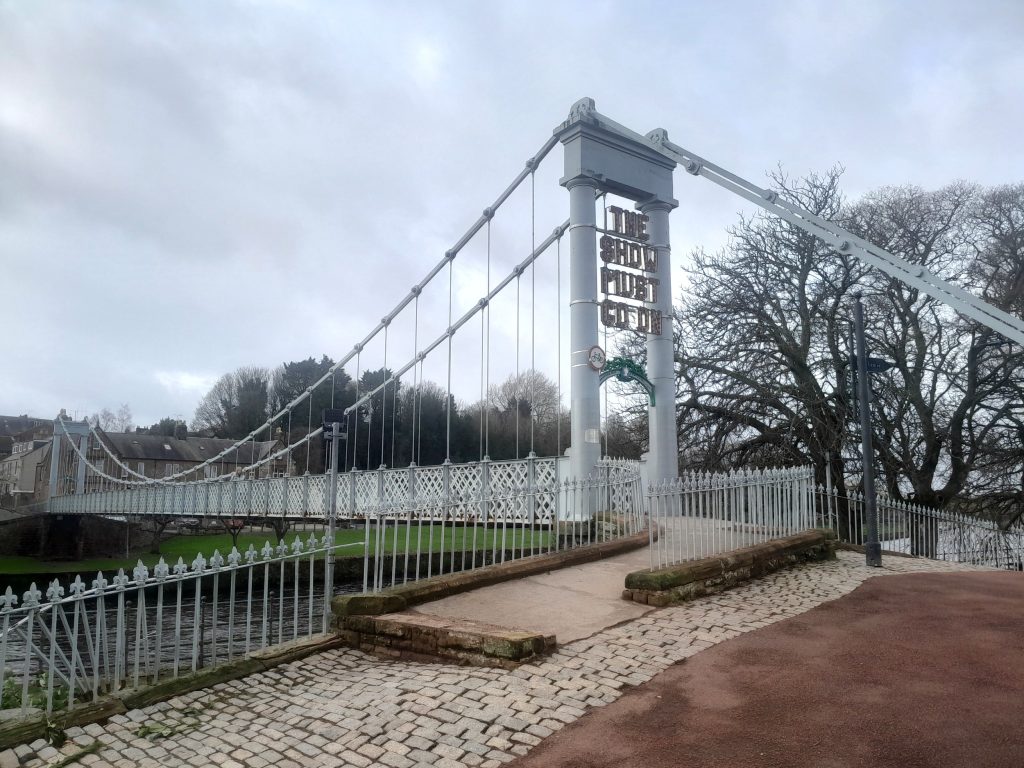
8. River Nith Suspension Footbridge
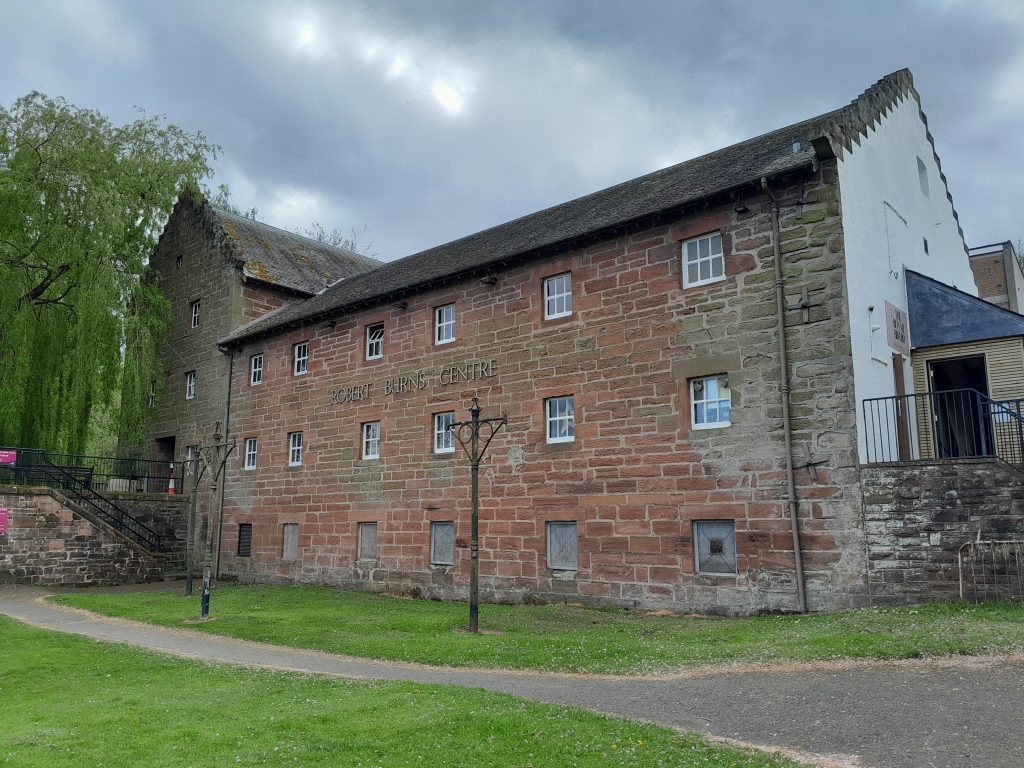
A further short stroll along the riverbank, in passing the historic Dumfries Mills (a former watermill once powered via sluices from the adjacent Caul or weir) – now the Robert Burns Centre and Film Theatre – will bring you to the cast-iron suspension as opened in 1875. Designed by John Willet, its 200-foot span eased pedestrian access to and from the tweed mills on either side of the Nith. It was refurbished in recent decades.
9. St Michael’s Bridge
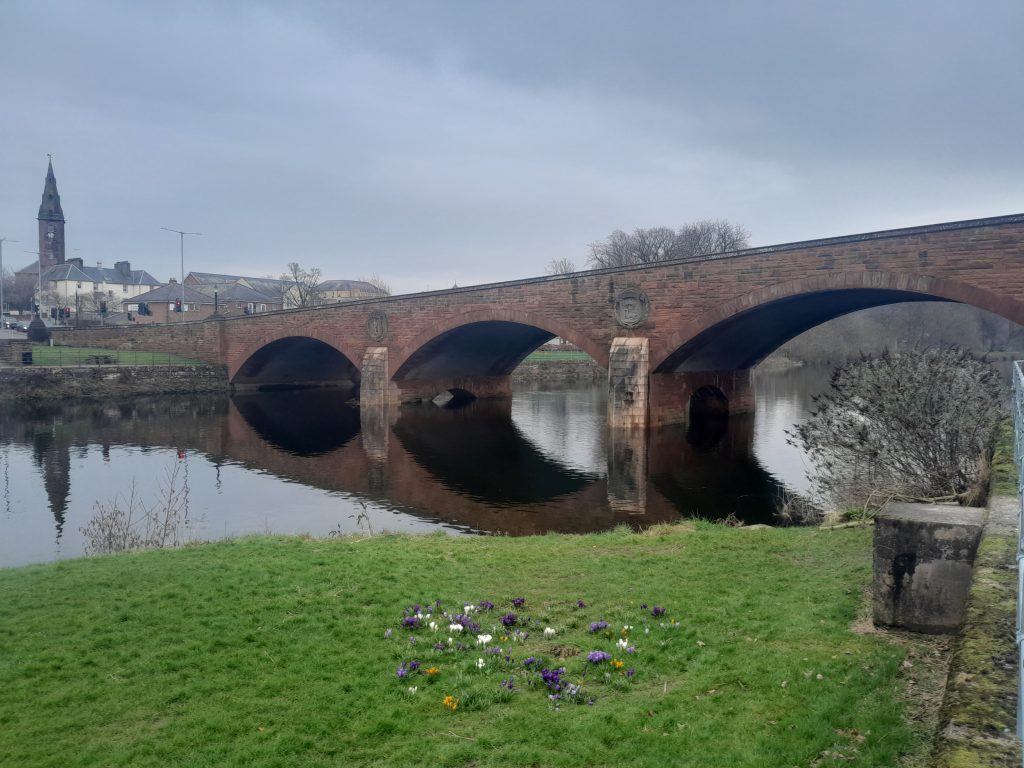
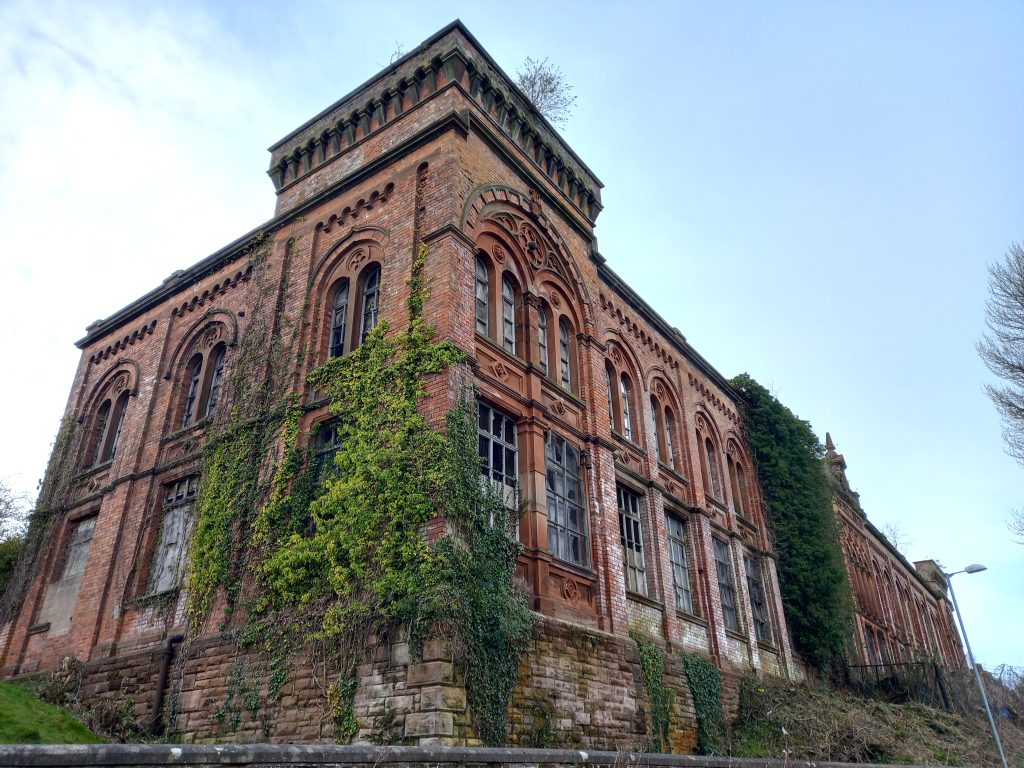
Next, is St Michael’s Bridge, as built 1925-27. On its sides, large stone plaques bear the arms of Dumfries and of Maxwelltown – the latter being a burgh in its own right between 1810 and 1929. From here, continue following the riverside path. Upon a bank looking over the Nith you will pass the huge Victorian-era Rosefield Mills, resembling some Venetian Palace, if currently derelict, then in turn a long stretch of wall above which is the graveyard and old parish church of Troqueer.

10. Kirkpatrick MacMillan Footbridge
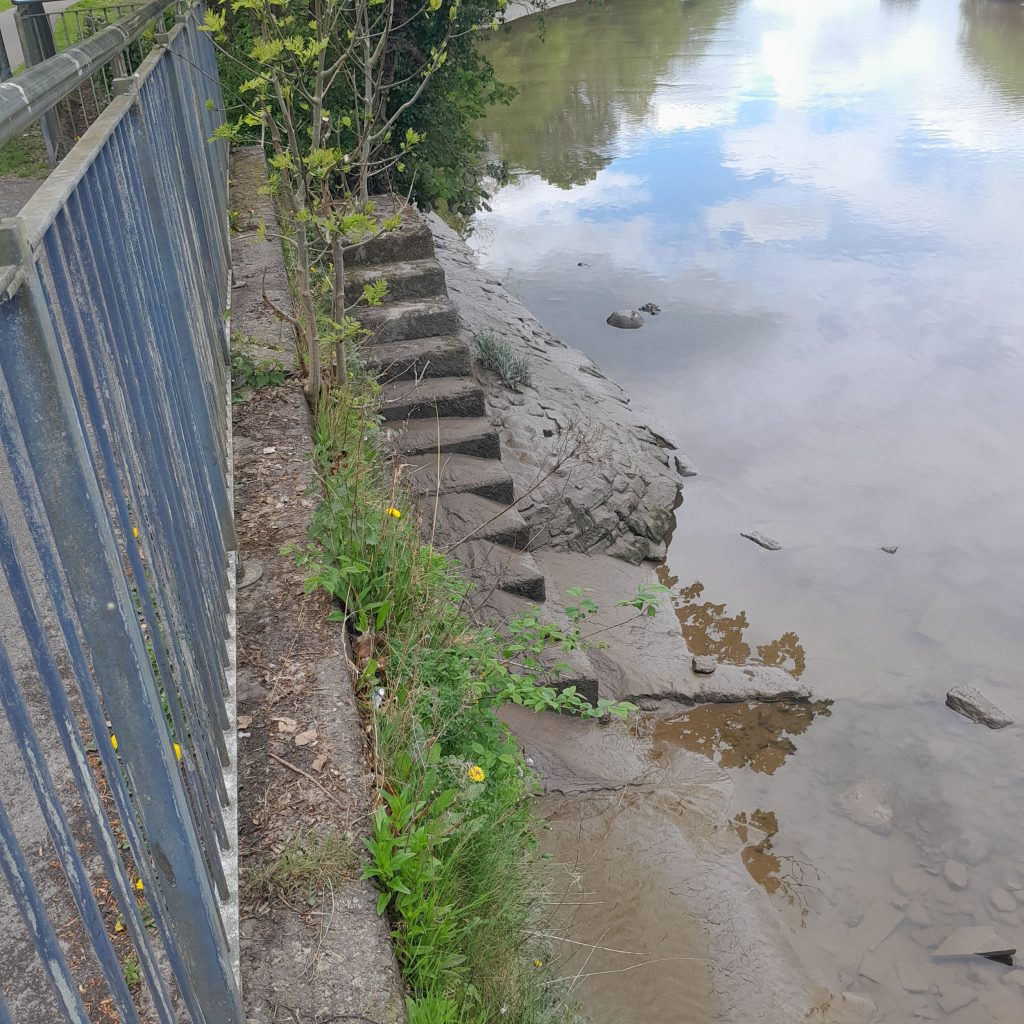
The last, or if you choose to begin the walk here then the first, of our ten bridge across the Nith, this footbridge, which is also designated on the National Cycle Route, was opened in 2006. It was named in honour of the Dumfriesshire blacksmith who reputedly invented the bicycle in 1839. Before crossing over to the east bank of the river, look over to the old flights of steps which led down to berthing points for boats, recalling long-lost times of the ‘Port of Dumfries’.
Return riverbank walk to town centre
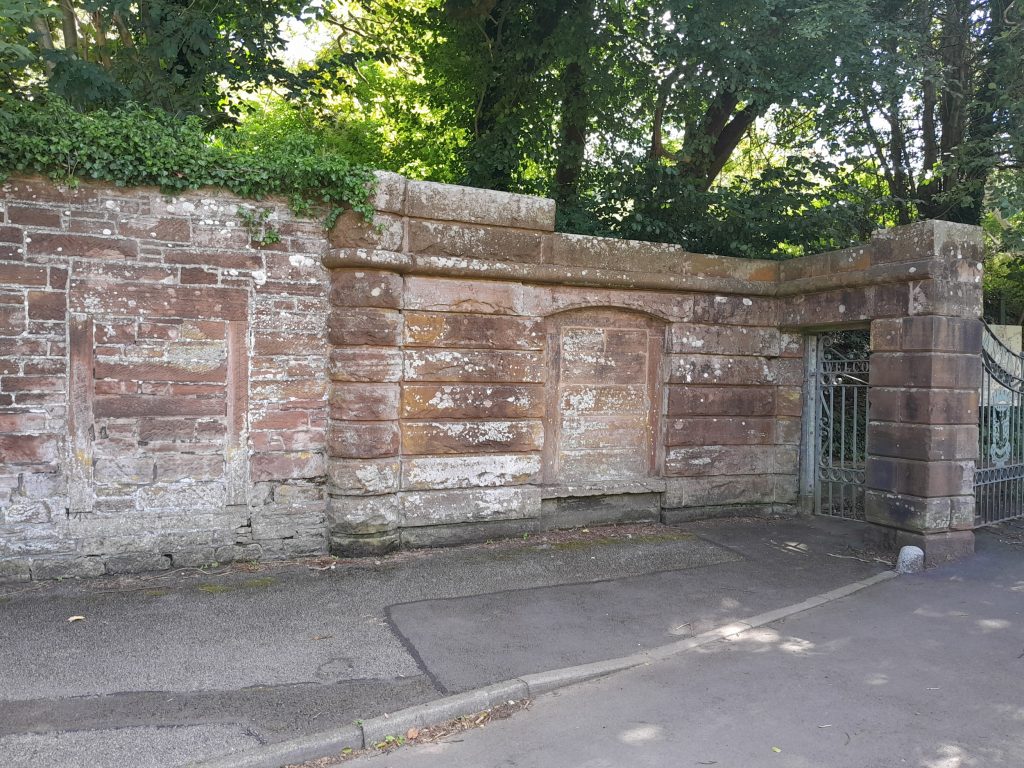
In returning towards our starting point of the Whitesands (or the town centre) along the eastern riverbank, you will pass numerous old features testifying of times gone by. The first image below shows the surviving wall from a gatehouse lodge of the old Castledykes Mansion. The mansion, like the medieval castle of Dumfries which once stood in this vicinity, has vanished – but the surrounding Castledykes Park makes for a pleasant diversion. Whether you enter the park or not, in continuing up the river you will notice several more flights of steps (some rather overgrown!) formerly serving boats, plus mooring posts by which vessels in the river were secured. In coming to Dock Park, in particular note the numerous ornamental cast-iron benches (dated c.1830-1890), the Titanic Memorial (commemorating two local men who died in the maritime tragedy – including one of the ill-fated liner’s famous bandsmen), and the elegant late-19th century Bandstand.