
Hoddom and Repentance Tower Walk
An ideal walk for a cold, crisp, winter’s day. Combine two, or three, signposted routes in the vicinity of the Hoddom Estate (approximately 4-6 miles) or for a lengthier trek, begin the journey at Annan in following the River Annan (the official ‘Annandale Way’ national trail). Hoddom Castle was a seat of the Maxwells, later of the Sharpe then the Brook families, with the little Repentance Tower constructed on nearby Trailtrow Hill during the sixteenth century to serve as a watchtower. It was built adjacent to a medieval chapel (now gone) and still surviving graveyard, itself a good source of historical information.
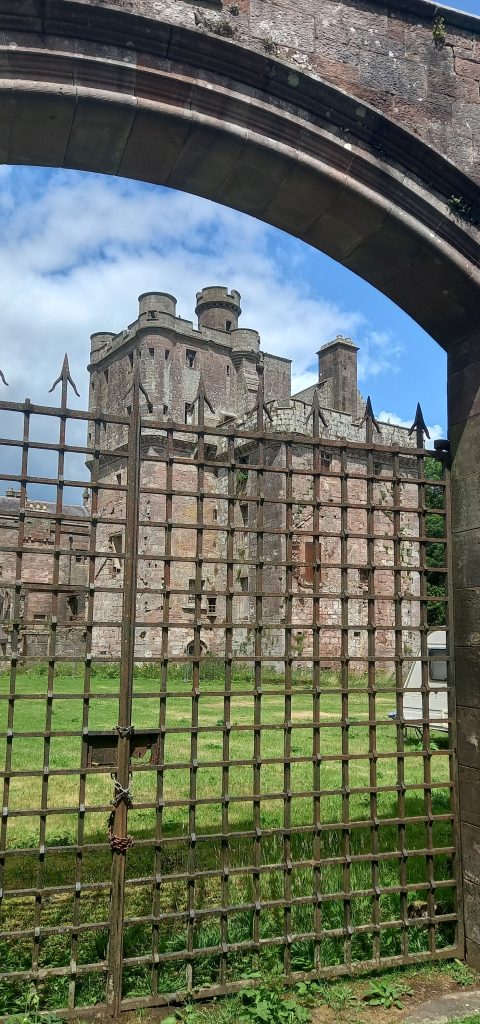
If arriving by car from the direction of either Annan or Lockerbie/Ecclefechan (or by foot from the Annandale Way) turn off the B723 onto the B725, marked with a road sign ‘Dalton 3’. Immediately turn into the little carpark to the right. Signs from there indicate two different paths into the Hoddom estate – a sizeable part of which is now a holiday (caravan) park. One of these paths (the line of the Annandale Way) follows the river bank, the other passing through woodland. The castle, the core of which is a huge sixteenth-century towerhouse, is the centrepiece of the estate, though is not open to the public.
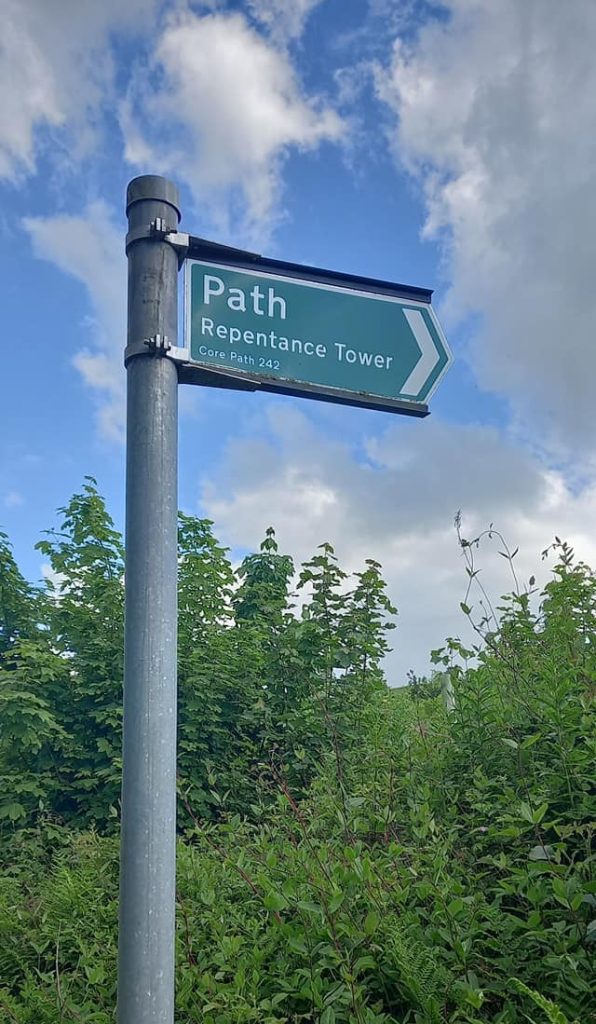
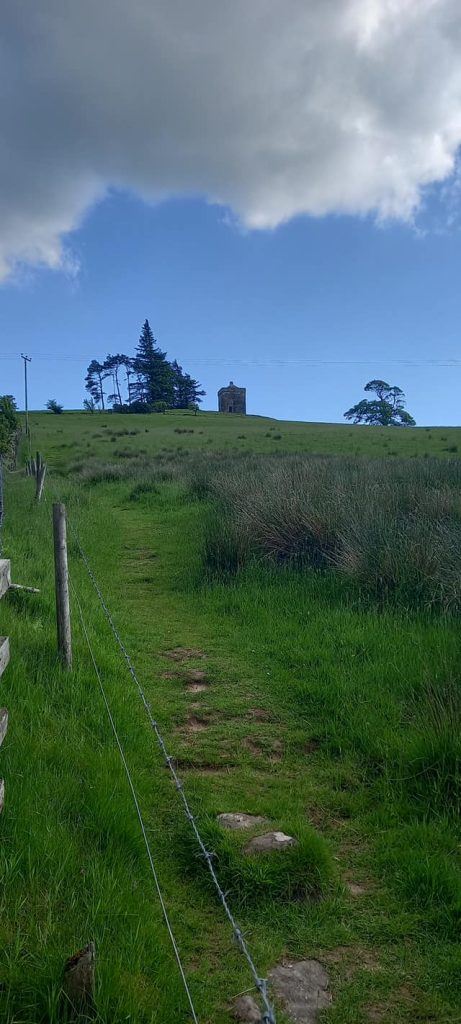
After exploring the estate, return to the carpark, then walk a half-mile up the B725 until the signpost is reached for Repentance Tower. Ascend the fairly steep slope to the hilltop (Trailtrow Hill) and view the tower, the old headstones within the graveyard, and the burial enclosure to the Murrays of Murraythwaite. On a good day the views of the surrounding countryside, and across the Solway Firth to the mountains of the Lake District, are quite suberb.
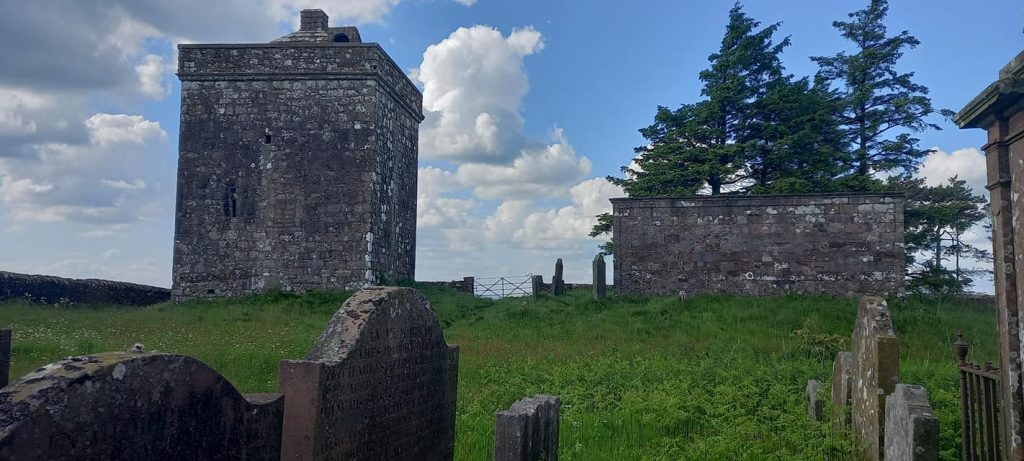
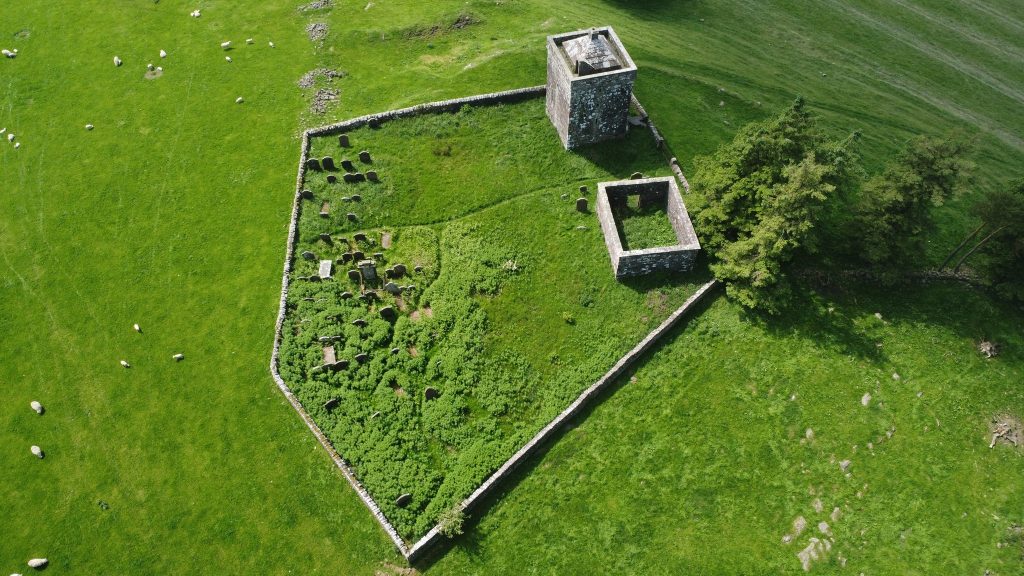
The tower is a mini-castle in its own right, with stout walls, small and narrow windows from where guns could fired, and a stone-flagged roof topped by a beacon upon which a fire could be lit to give warning of raids.
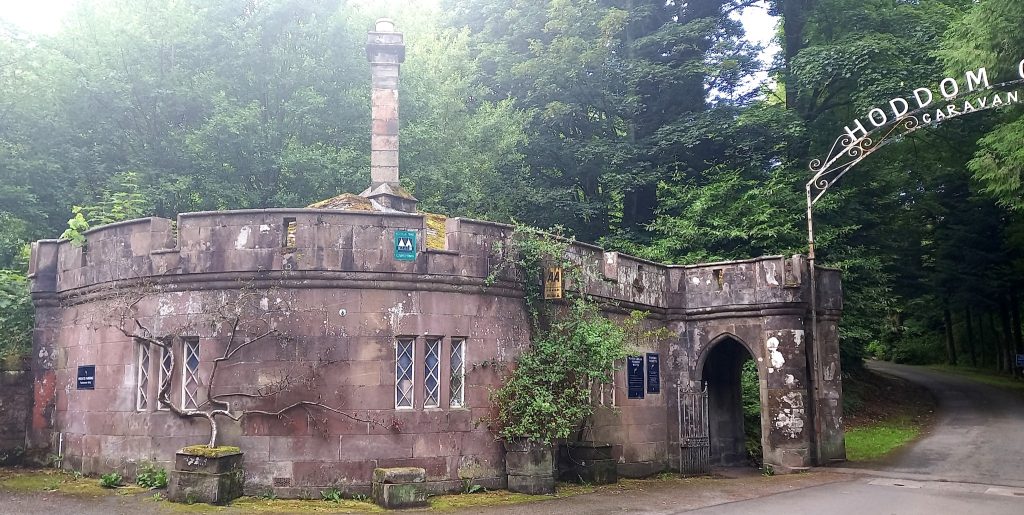
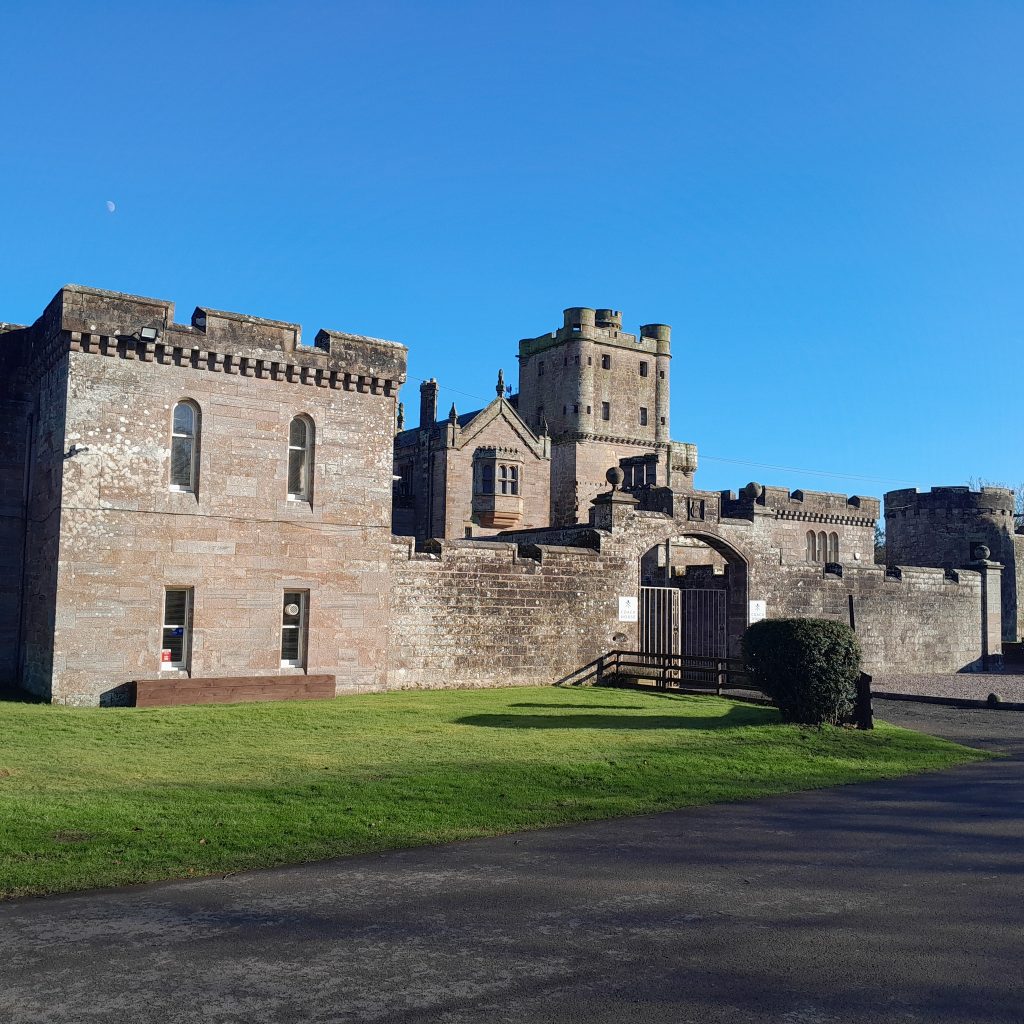
After (or before) visiting the Hoddom Estate and Repentance Tower, divert just down river to the ancient Old Hoddom burial ground. Directions: back at the car park, continue on foot a short distance north on the B723 (passing the castle-like gatehouse to Hoddom estate – which contains a public toilet – as shown in image), cross the old Hoddom Bridge, then turn right into the field. A signpost indicates this is the line of the Annandale Way.
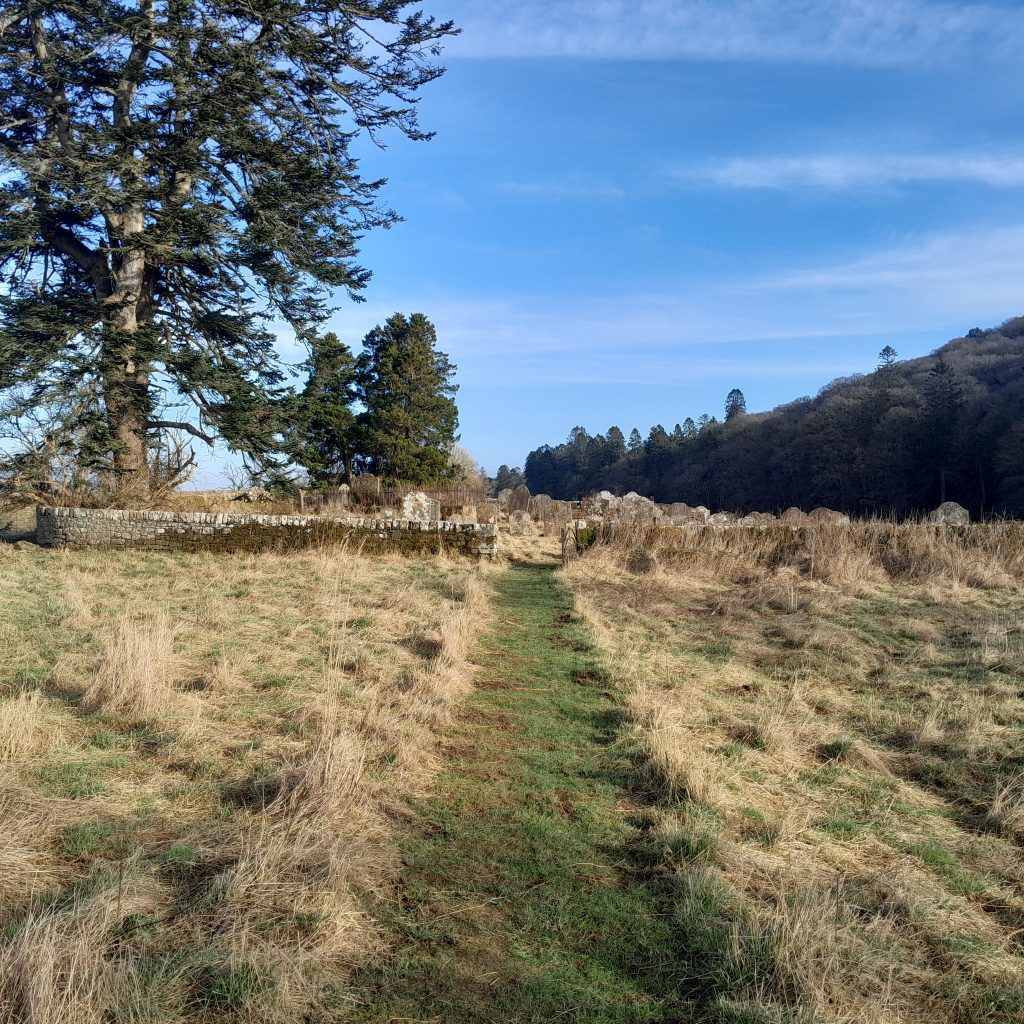
In following the riverbank for a few hundred yards, you will arrive at the Old Hoddom graveyard, a sacred spot containing many fascinating old headstones and other memorials. As with the former chapel on Trailtrow Hill next to Repentance Tower, the ancient church here has disappeared (as has an even older Anglian monastery dating from the seventh century), but with again an information board detailing the history of the site.
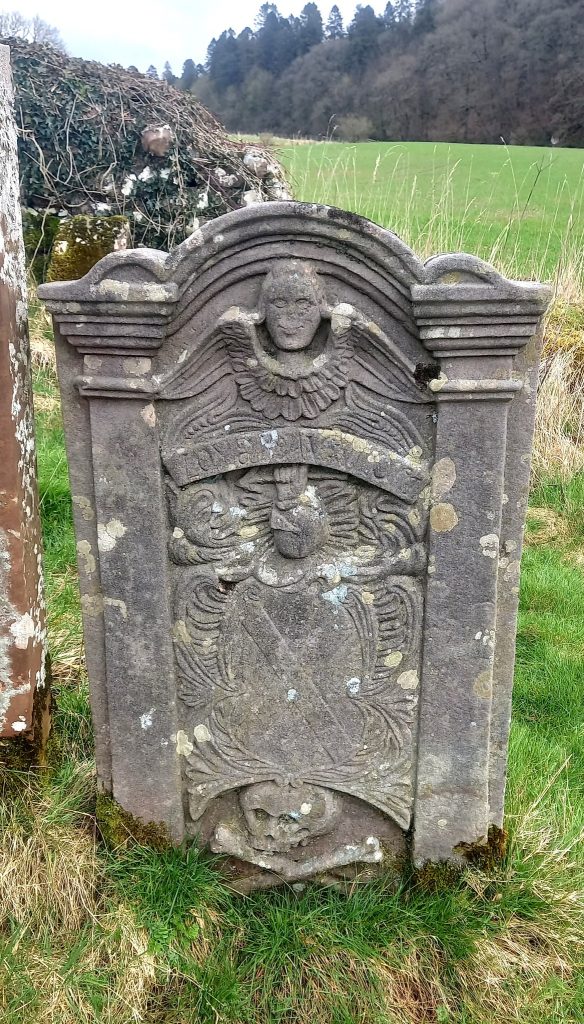
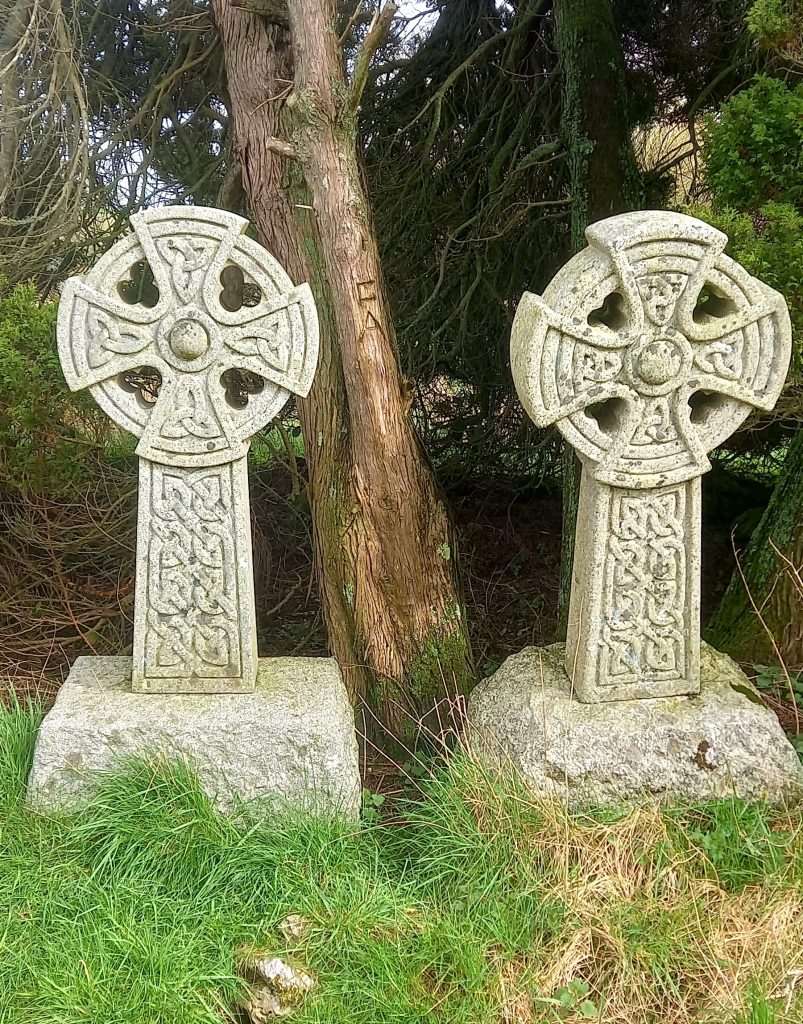
Images (left to right): Old Hoddom – carved 18th c. headstone (Little family) and memorials to the Brooks of Hoddom
Links to walks: