Exploring your Ancestors
Family & Local History Centres
In Dumfries, the Heritage Service – a self-contained section of the famed Ewart Library – is home to an extensive range of material on local and family history. It is also the contact point for accessing archive material searchable by keyword(s) via online catalogues, or by contacting the Heritage team (advance notice is required to consult original archive records). Meanwhile, the volunteer-run Dumfries and Galloway Family History Society (DGFHS), currently open two days a week, offers similar guidance and help. To assist in advance research, around 200 of the Society’s publications (including memorial inscriptions for individual historic graveyards) are each available for purchase at a modest price, and can be instantly downloaded in PDF form (or sent by mail order). Local museums, such as those at Newton Stewart and Dalbeattie, also contain much of interest to those researching ancestors and local history.
We offer a personalised ancestry-research service, covering the entire region (and if needs be, beyond), at modest per-hour rates. Email for further details, or simply to discuss your requirements.

Old Graveyards: Annandale & Eskdale
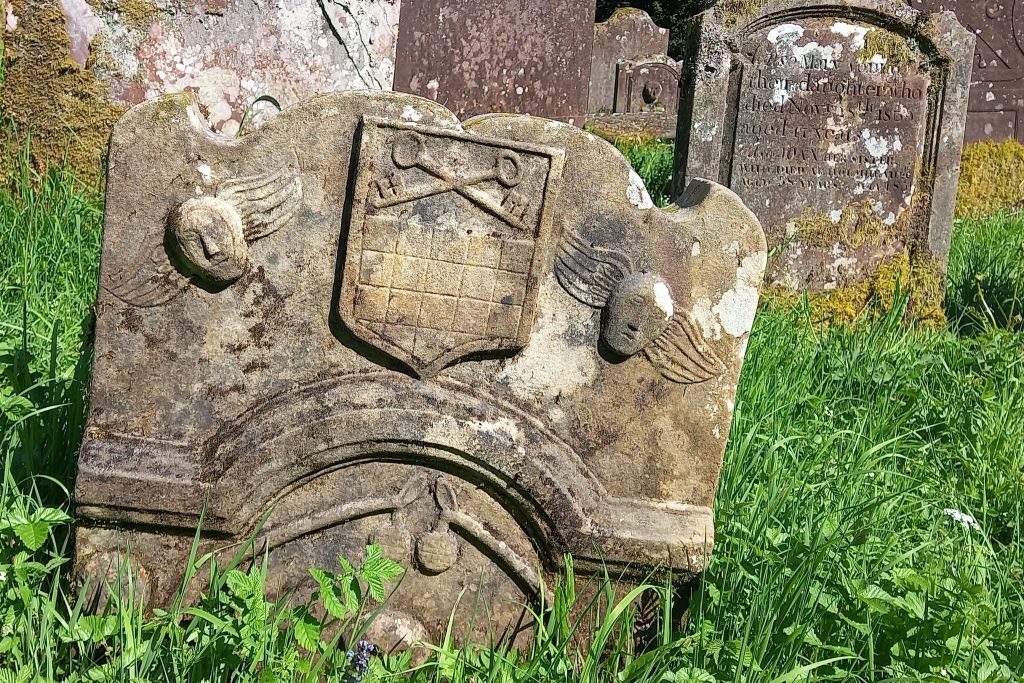
As a consequence of flanking the Border with England, this eastern end of today’s Dumfries and Galloway region was home to many famous (or infamous) warlike ‘reiving’ families (or ‘clans’) whose names still figure prominently among the local population today. They also stand out in the rich carved-headstone heritage of its old graveyards, notably in the vicinity of places like Gretna, Ecclefechan, and Lockerbie. For example: Armstrongs, Irvings, Beatties, Carlyles, Carruthers, and Johnstones, to name but a few. Undertake a bit of prior research, plus perhaps equip yourself with the relevant Memorial Inscriptions booklet (DGFHS), and you may find just the ancestral resting place you are looking for. Or simply enjoy a wander around these tranquil spots. Sadly, many of the adjoining churches have now closed, having become private homes or studios – but this does not prevent access to the graveyards themselves. Others are in ruins, but in ways only adding to the charm. (image: 1700s Beattie headstone at Kirkconnel, near Ecclefechan).
Old Graveyards: Dumfries (town) & Nithsdale
From the town of Dumfries in the south, to Sanquhar and Kirkconnel in the north, explore the splendid range of historic churches and their accompanying graveyards along the Nith Valley – collectively rich sources of information for family and local history enthusiasts. The kirkyard of St Michael’s in Dumfries serves as a veritable ‘who’s who’ of the burgh and wider region’s history across several centuries – with perhaps pride of place accorded to Burns’ Mausoleum, resting place of Scotland’s national poet. Meanwhile in dozens more, the stylish mausoleums and burial enclosures of illustrious families stand alongside more humble memorials to the multitude of ‘lesser folk’ – all with their stories to tell in details of careers abroad, emigration, the sadly common incidence of infant mortality, and much more.
Old Graveyards: Kirkcudbrightshire
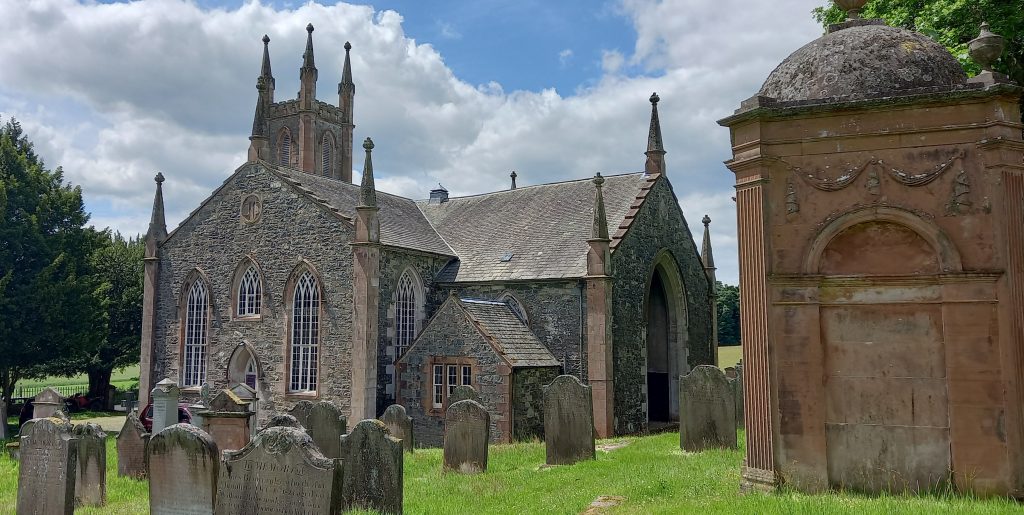
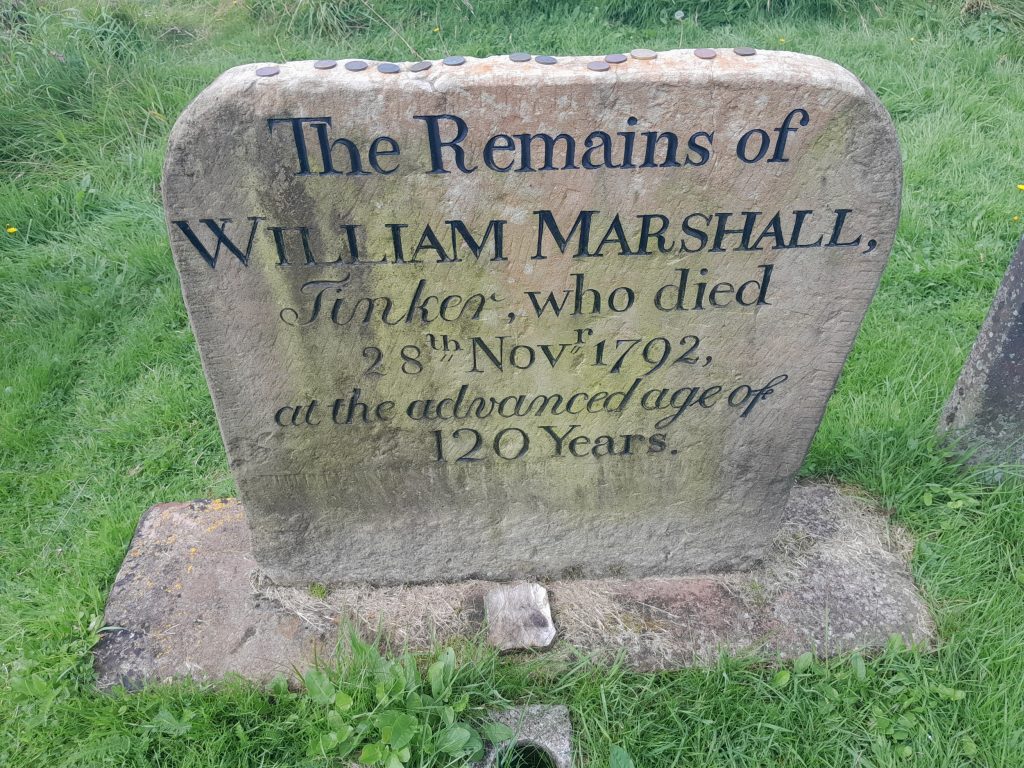
In terms of an evocative blend of scenery, namely rolling hills, forests, lochs, rugged coastline and secluded beaches, the ‘Stewartry’ of Kirkcudbrightshire can have few if any equals in Scotland. The county’s wide variety of beautiful old kirks and kirkyards serve only to compliment the wider tableau – and again constitute a heritage treasure trove. One notable family ‘clan’ across its various branches in the centre of the ‘shire’ were the Gordons, for whom we find a particularly impressive legacy at St John’s Town of Dalry and Crossmichael. But there are many, many more old families associated with the area each with their tale to tell, as typically carved on the headstones above their burial places. Just outside the town of Kirkcudbright, is a huge graveyard containing hundreds of memorials, testifying collectively (and individually) to the burgh’s important mercantile past – not to mention the grave of Galloway’s ‘Gypsy King’, the allegedly 120-year-old (and 17 times married) Billy Marshall.

Old Graveyards: Wigtownshire
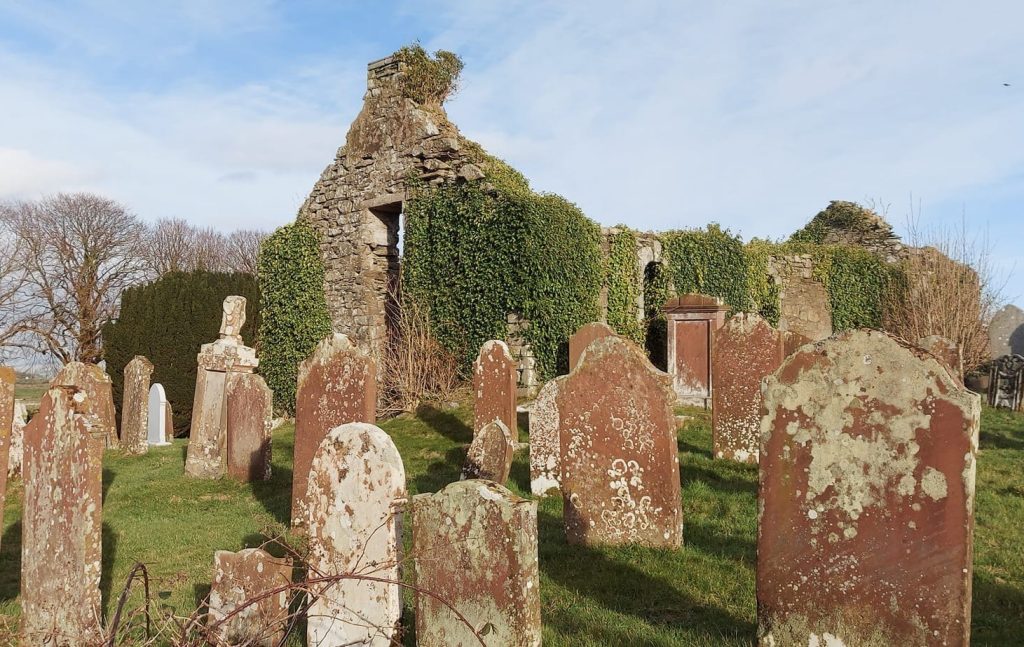
Wigtownshire, consisting of the Machars and the Rhins of Galloway (and to the north ‘the Moors’) has preserved something of a particular remoteness in character, a situation contributing to its haunting charm. It also contains the best selection of historical sites from the wider region’s early and ‘pre’ (recorded) history, plus is home to a good number of old parish churches and graveyards – many on the sites of chapels dating from the time of the arrival of Christianity in Scotland. These are also important sources of information for discovering distinctly local families, such as McDowalls, McCullochs, Agnews, Adairs, and Hannays – plus others of more humble origin like Jollys, McGills, Brolls, and McGuffies. Many of the old kirks are in ruins, like that pictured (Sorbie) while – as elsewhere in Dumfries and Galloway – others remain open as places-of-worship or have been converted to residential or community use. However, once more, public access to all graveyards is guaranteed.