
Pre and Early History (selected sites)
Eskdalemuir Iron Age Hillforts
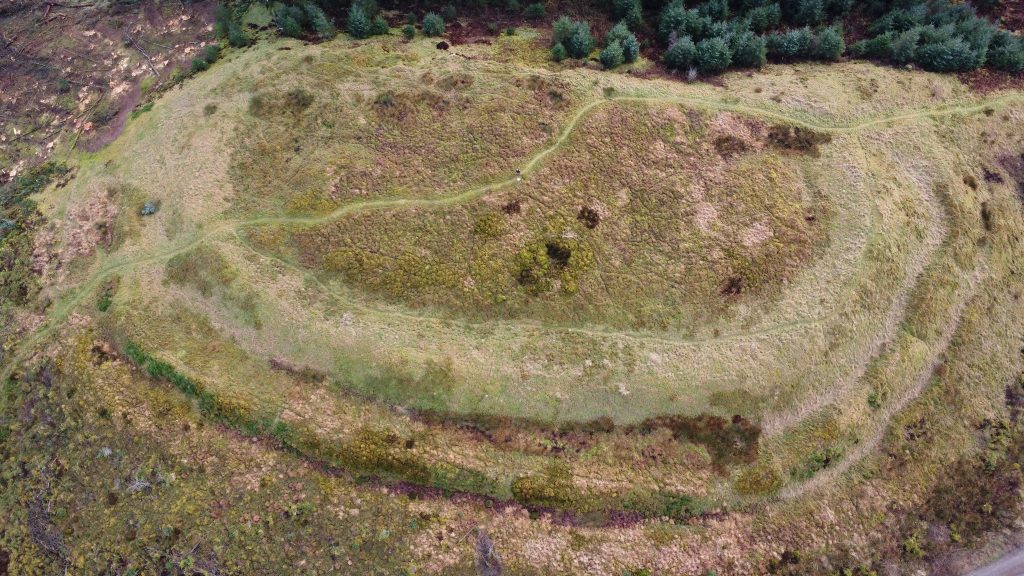
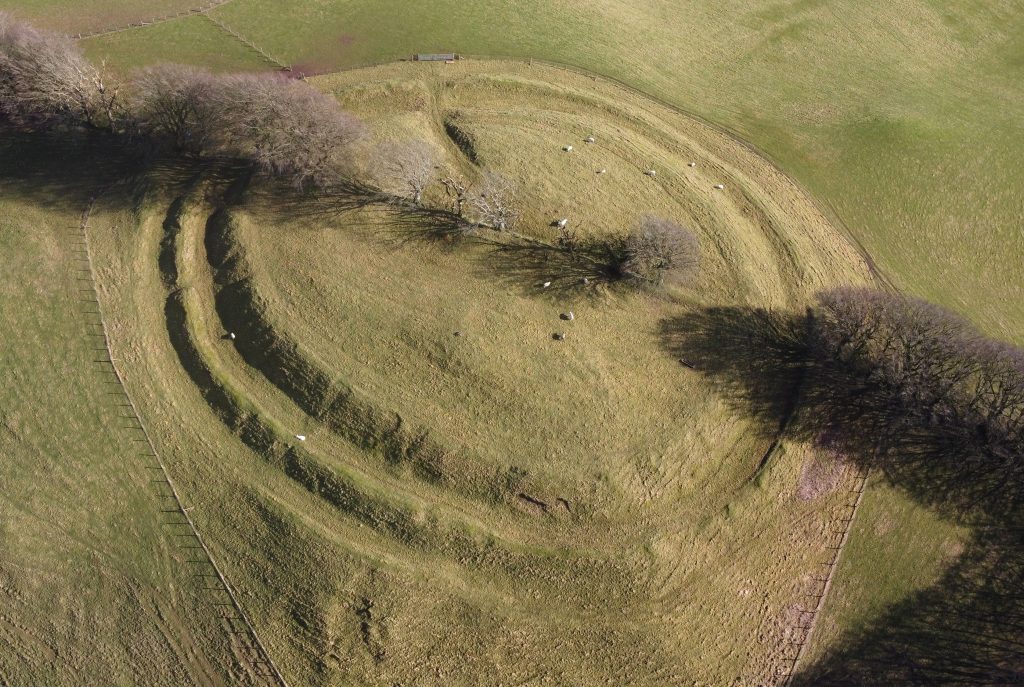
At the north-eastern end of the region, once the home of the powerful Selgovae tribe, follow the Prehistoric Trail through this rugged and remote upland landscape in visiting Iron Age hillforts and other ancient sites. Notable forts accessible by pathways, mostly complimented by information boards, are Castle O’er, Bessie’s Hill (actually two forts – one shown in image), Bailiehill, and the smaller ‘Knowe’. Explore the area by car (public transport is limited) stopping at lay-bys at the individual locations. The trek up to and around each fort makes for a pleasant, in cases invigorating, walk in itself.
Burnswark Iron Age Hillfort & Roman site (near Lockerbie)
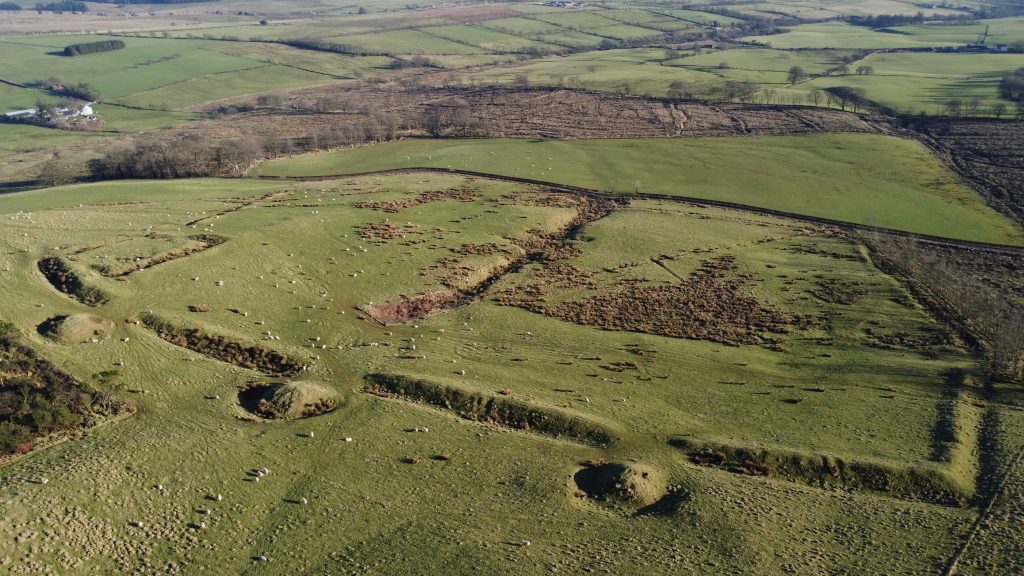
This huge site principally consists of traces of a tribal fort upon the 17-acre tabletop summit of Burnswark Hill, a feature of the Annandale landscape visible over the Solway from the Cumbrian coast. It was allegedly the capital of the Novantae tribe and scene of a siege by Roman legions around 140 AD. Archaeologists – who are often present here today – and historians continue to reassess and debate the site history, but incontestably there are Roman works (whether siege or siege ‘training’) surviving around the base of Burnswark. Approach by minor roads from Ecclefechan, parking on rough ground alongside the road beneath the hill, then progress on foot to the summit.

Cairn Holy Chambered Cairns (near Creetown)
Situated on a hill offering fine views over Wigtown Bay, the two cairns of Cairn Holy are an impressive survival of neolithic burial monuments dating from the 4th millennium BC. Both tombs are now open to the sky – their covering stones having been robbed in more recent centuries to build field dykes. Cairn Holy I is the more elaborate of the two, while Cairn Holy II is said to be the tomb of the mythical Scottish king Galdus. Open all year round, parking available, admission free.
Whithorn Trust Visitor Centre, Priory & Museum
The royal burgh of Whithorn, situated at the southern end of the Machars of Wigtownshire, is a town with a long and acclaimed history. Notably so as the probable location of the first Christian church in Scotland (dated c.400 AD) and subsequently as a place of Anglo-Saxon and Norse settlement, then as a destination of medieval (including royal) pilgrimage to the shrine of St Ninian. For over a century archaeologists have dug at Whithorn, resulting in a huge archive of over 42,000 items, examples from which are researched by the ‘Cold Case Whithorn’ team on an ongoing basis. Visit the remains of the medieval priory, the ancient carved stones in the adjacent museum, and the replica Iron Age roundhouse (pictured). Café, shop, adequate parking – all in a town which has preserved its medieval form and Georgian charm. Travel into the surrounding countryside to explore numerous other historic sites and the idyllic coastline. Admission charges to museum and roundhouse. Open April to October, priory ruins and graveyard viewable all year.

Drumtroddan Standing Stones & Cup and Ring Marked Rocks (near Port William, Wigtownshire)
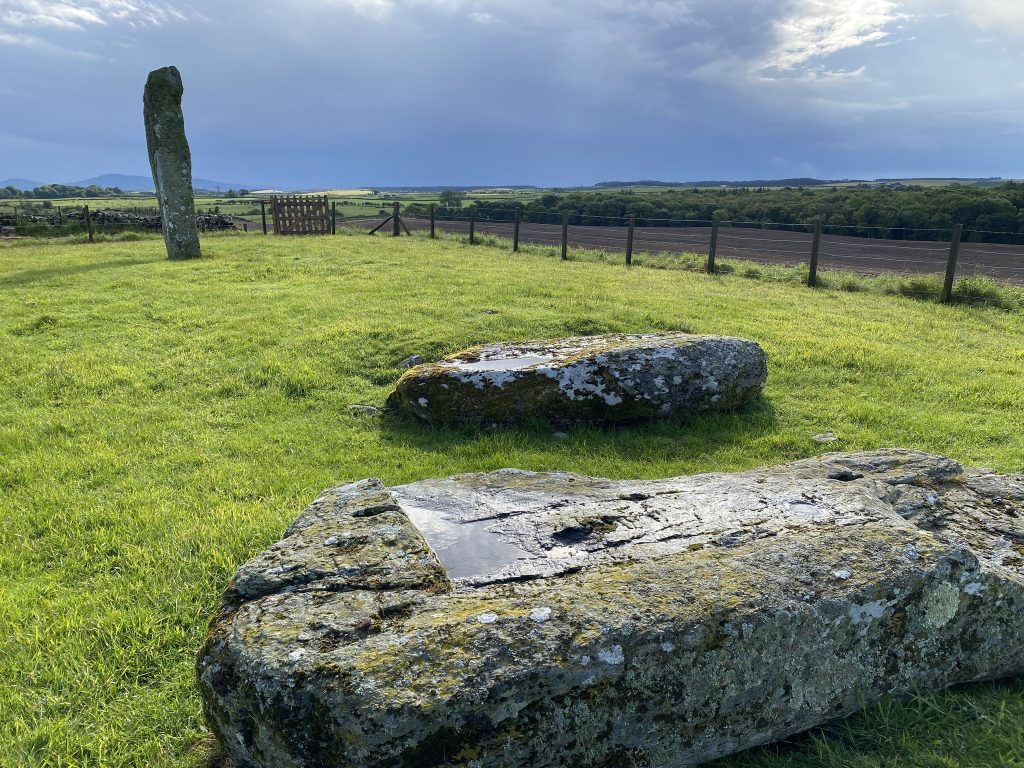
There are two sites at Drumtroddan, dating to the second or third millennium BC. The first consists of three stones, two of which have fallen, but with the third one standing some 3m high. It is likely this was a ceremonial site, where observations of the Sun or Moon were made. The nearby Cup and Ring Marked Rocks are if anything even more enigmatic, the meaning of their symbols still posing a mystery. Historic Environment Scotland maintains both sites, admission free all year round (access via farm).
Torhouse Stone Circle (near Wigtown)
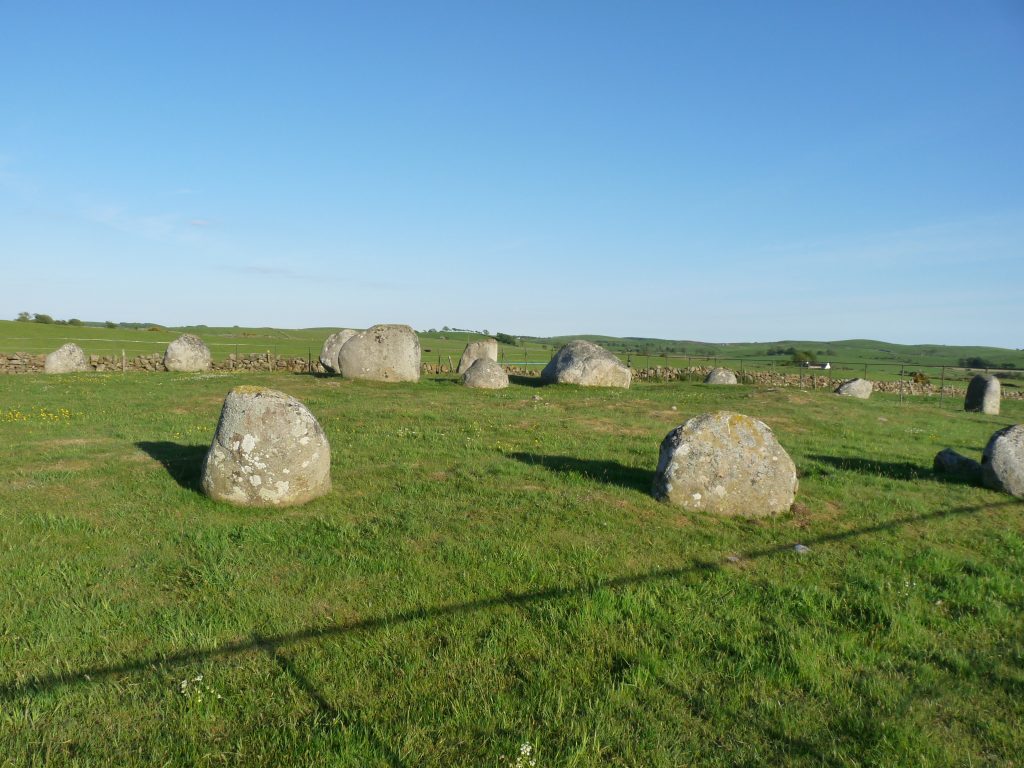
Dated to the fourth or fifth millennium BC, this site consists of nineteen stones surrounding three in the centre. There are additional stones, and remains of burial cairns, in the vicinity, suggesting that Torhouse was an important regional centre, including quite possibly one of worship. Free access all year round, HES information board, and parking.

St Ninian’s Cave and Chapel (Isle of Whithorn)
Combine a visit to these two historic places with an exhilarating coastline walk. In the picturesque village of Isle of Whihorn, St Ninian’s Chapel, the current version of which dates from c.1300, was a place of worship and pilgrimage. A few miles along the coast – more easily walked to from a small carpark at Physgill – sits the natural sea cave held in tradition to have been used as a hermitage by Saint Ninian around 400 AD.
Kirkmadrine Stones & Chapel (Rhins of Galloway)
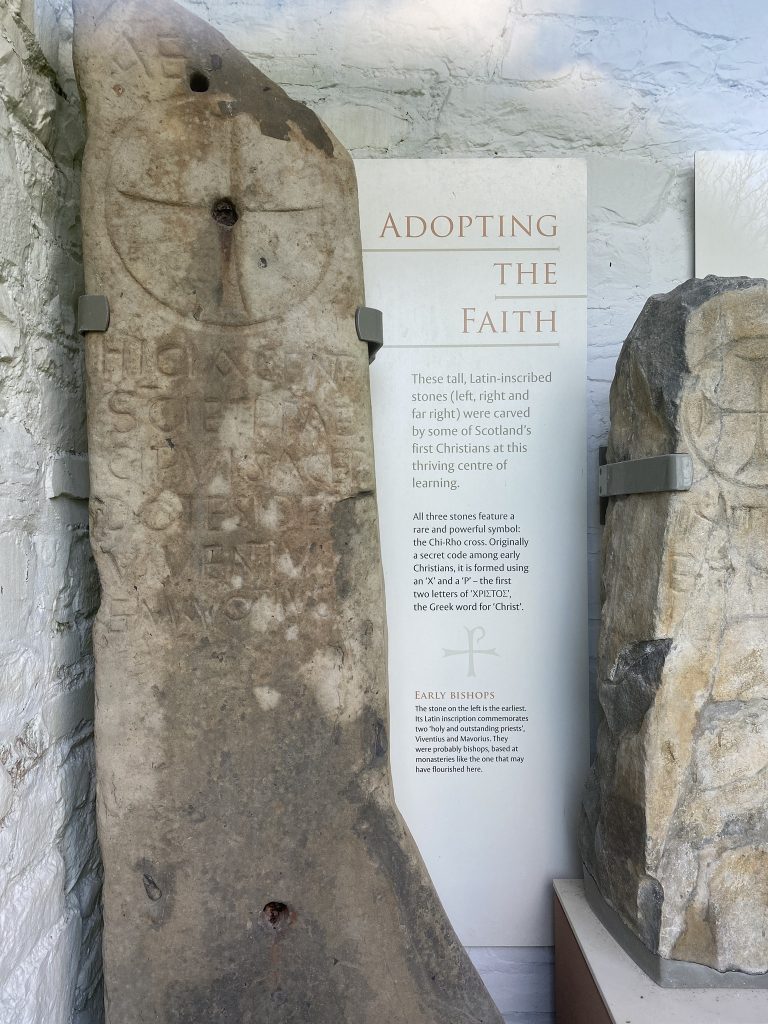
At an early Christian site quite probably dating from the sixth century, incised stones (some with Latin inscriptions and Greek chi-rho crosses) are now preserved in the surviving portion of a historic parish church, itself likely built with material from an earlier monastery on the spot. The remaining memorials, all formerly located in the graveyard, date from the c.700 to 1100 AD. Historic Environment Scotland maintain the site, admission free, open all year round.
Other Pre/Early Historic Sites (in abundance)
In addition to the places described above, there are many hundreds of others across Dumfries and Galloway testifying of human settlement from the neolithic through early-medieval periods. A map search via HES trove.scot (currently typing in ‘Dumfries’ brings up a multitude of sites right across the region) gives scope for further exploration of any given area or locale. Often, however, certain locations are on farm land or private property. In general it is best to seek local advice before attempting a visit. (image: Barr’s Hill Iron Age hillfort, near Dumfries).