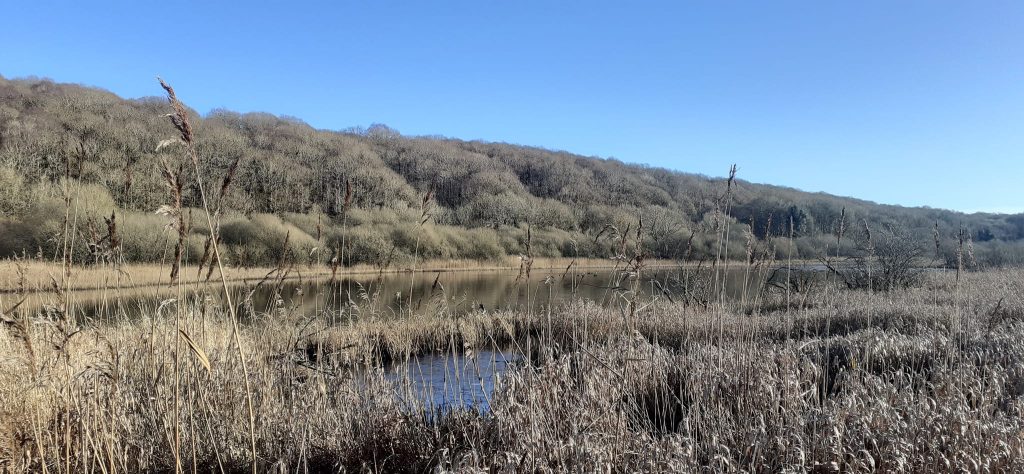
The Machars, Glenluce, and Newton Stewart – Places to Visit
Wigtown
In addition to being Scotland’s National Booktown and scene of the acclaimed annual Wigtown Book Festival (see our page: Arts & Culture<The Arts & Literature), Wigtown is an ideal base from where to explore the Machars. Places to visit a short drive (or potentially bus trip) away include Whithorn and the Isle of Whithorn, prehistoric sites such as those at Drumtroddan and Torhouse, and the Bladnoch Distillery. Walking options meanwhile pass other historic sites, and offer wildlife-viewing opportunities, all against a backdrop of impressive scenery.
Whithorn
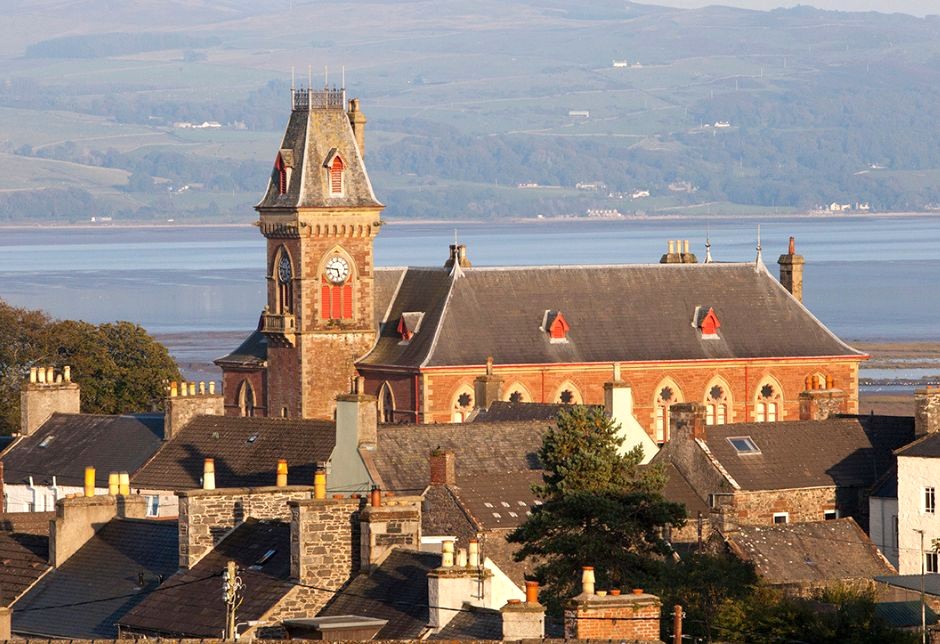
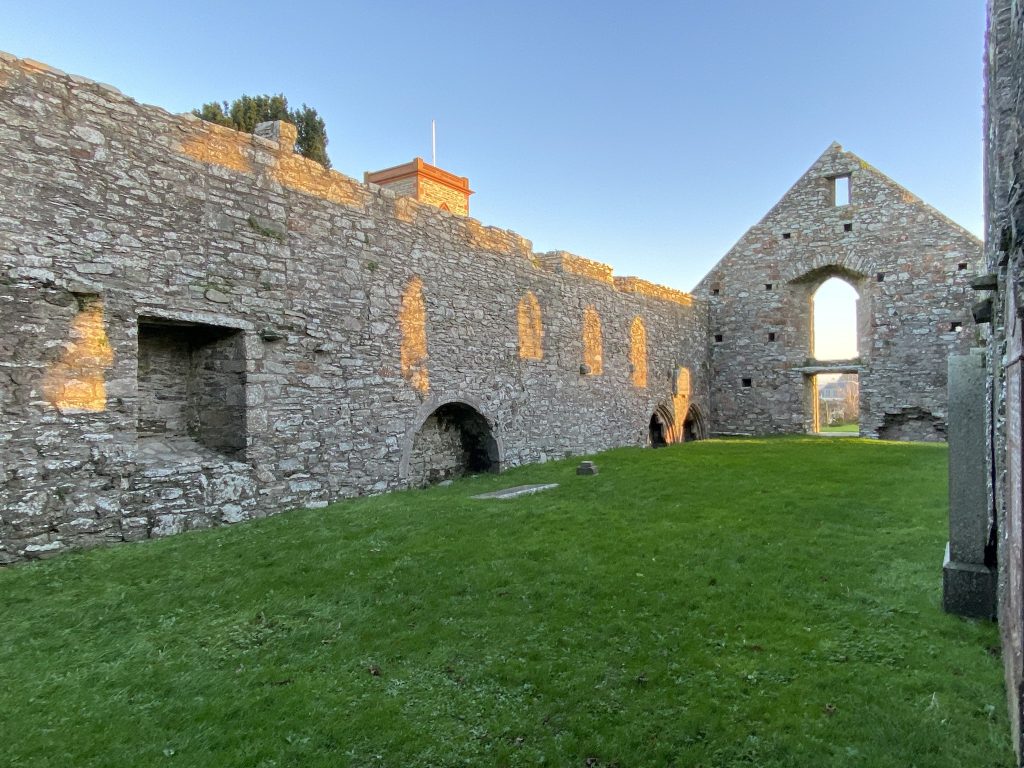
The royal burgh of Whithorn, situated near the southern end of the Machars, is a town with a long and acclaimed history. Notably so as the probable location of the first Christian church in Scotland (dated c.400 AD) and subsequently as a place of Anglo-Saxon and Norse settlement, then as a destination of medieval (including royal) pilgrimage to the shrine of St Ninian. For over a century archaeologists have dug at Whithorn, resulting in a huge archive of over 42,000 items, examples from which are researched by the ‘Cold Case Whithorn’ team on an ongoing basis. Visit the remains of the medieval cathedral-priory, the ancient carved stones in the adjacent museum, and the replica Iron Age roundhouse. Café, shop, adequate parking – all in a town which has preserved its medieval form and Georgian charm. Travel into the surrounding countryside to explore numerous other historic sites, the scenic Isle of Whithorn, and stretches of idyllic coastline. Admission charges to museum and roundhouse. Open April to October, priory ruins and graveyard viewable all year. (Image: old parish church incorporating priory remains).
Port William and Monreith
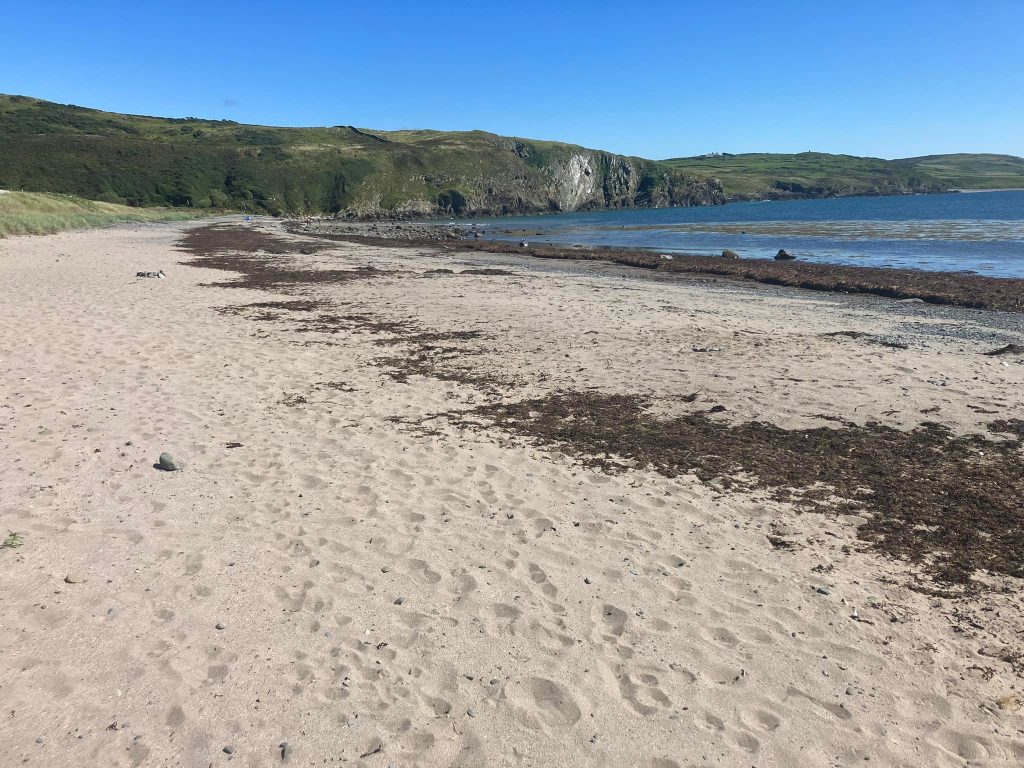
On the eastern shore of Luce Bay, founded as an eighteenth-century fishing village, the village of Port William offers fine views over to the Rhins and (on a clear day) the Isle of Man. To the south, long beaches, in stretches flanked by cliffs, extend to and beyond Monreith. Places of interest to visit in the locality include the Monreith Estate, the Early Christian site of Chapel Finian, the prehistoric stones at Drumtroddan, the Iron Age promontory fort of Barsalloch, and the old kirk and graveyard at Mochrum. Of several walk alternatives, one of note mainly follows the shoreline in passing the ‘Maxwell’s Otter’ memorial and the old Kirkmaiden church and burial ground. Another, in the verdant Monreith Estate, circuits the White Loch of Myrton, bringing into view the site of a crannog and and the ruins of Myrton Tower. (image: Monreith Bay).
Garlieston, Sorbie, Cruggleton, & Rigg Bay
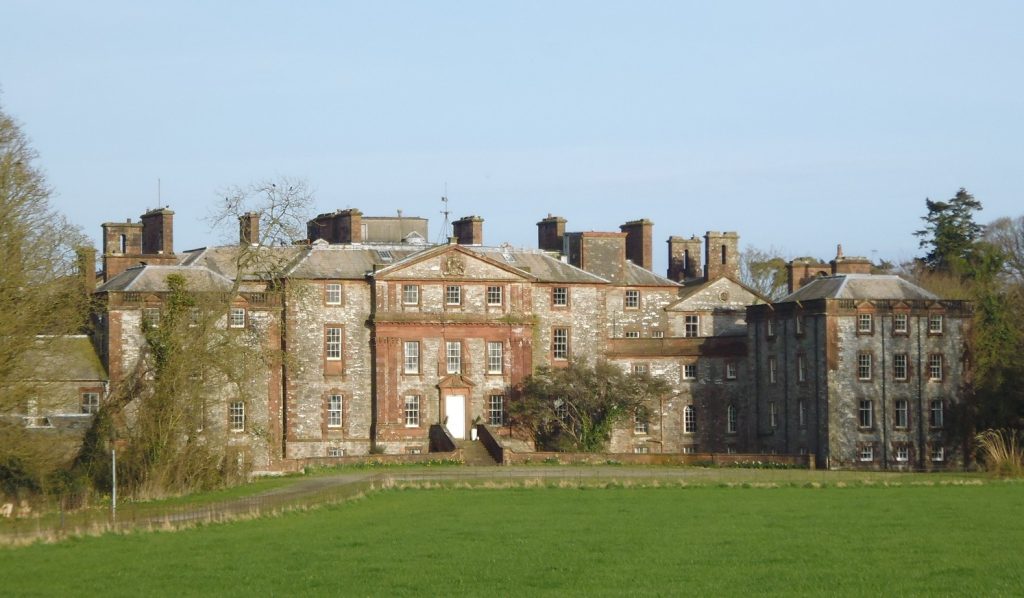
On the eastern side of the Machars peninsula, like Port William, Garlieston represents another eighteenth-century planned fishing village and small port. Here the village has beaches on either side, while nearby stands the majestic Galloway House. A fine walk passes through the House gardens and rounds Rigg Bay to the scant but magnificently-sited clifftop ruin of Cruggleton Castle. In Rigg Bay itself, at low tide you can inspect the remains of the World War 2 ‘Mulberry Harbours’. In the hinterland of Garlieston, places to see include the historic Sorbie Tower – home of the Clan Hannay Society – and the old kirk and graveyard in Sorbie village.
Newton Stewart
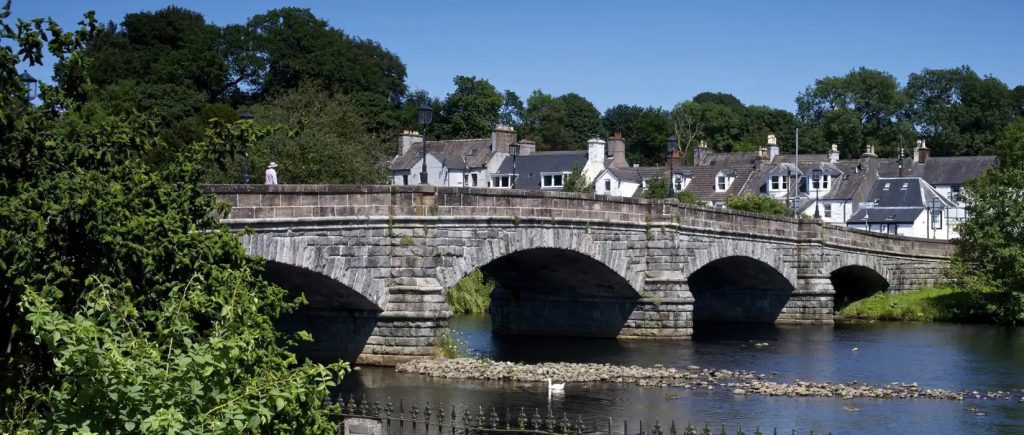
An ideal base to explore the Galloway Hills and Forest Park, the world-class 7stanes mountain bike centre – plus more widely places of interest for lovers of wildlife and history – the market town of Newton Stewart is moreover amply served by shops and supermarkets for those seeking provisions while on holiday. The town lies on the west bank of the River Cree (pictured); while on the other side sits the older settlement of Minnigaff – with its historic church and graveyard plus ‘motte’ castle mound – as reached across the eighteenth-century Bridge of Cree. While in Newton Stewart visit the local museum, and follow one of the local walks along the riverside, or up to Knockman Wood where you will pass a neolithic chambered cairn and arrive at a ruined medieval towerhouse (early seat of the Stewarts of Galloway).
Glenluce and environs
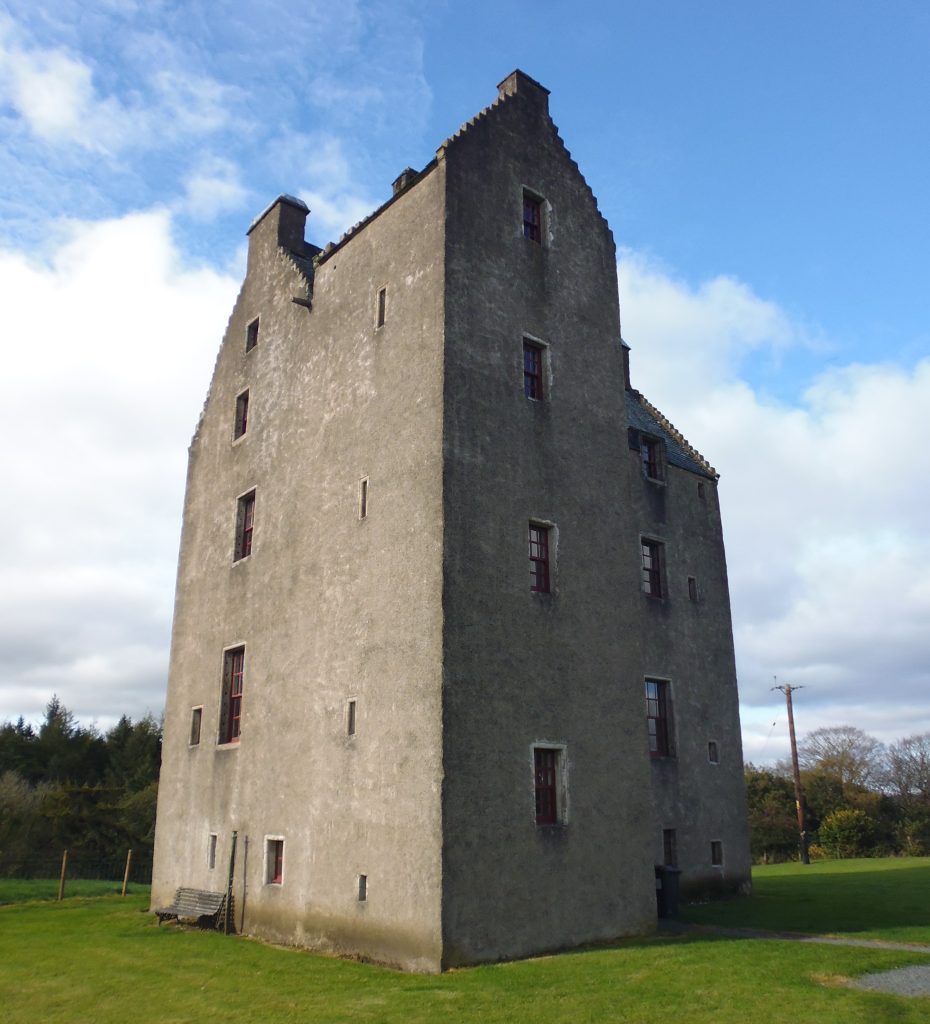
Situated almost at the the crossing point between the Rhins and the Machars, the vicinity of the village of Glenluce contains many hidden charms: the old railway viaduct and the Castle of Park (pictured), Glenluce Abbey, a fine clifftop walk passing the tiny former fishing hamlet of Stairhaven, and minor roads perfect for leisurely cycling. A short (unofficial) walk from Glenluce terminates at the sad ruin of Carscreugh Castle connected with Sir Walter Scott’s The Bride of Lammermuir, with another more scenic option leading to Luce Sands. Meanwhile, the famed Castle Kennedy Gardens are situated a 7-mile drive west.
Prehistory Trail
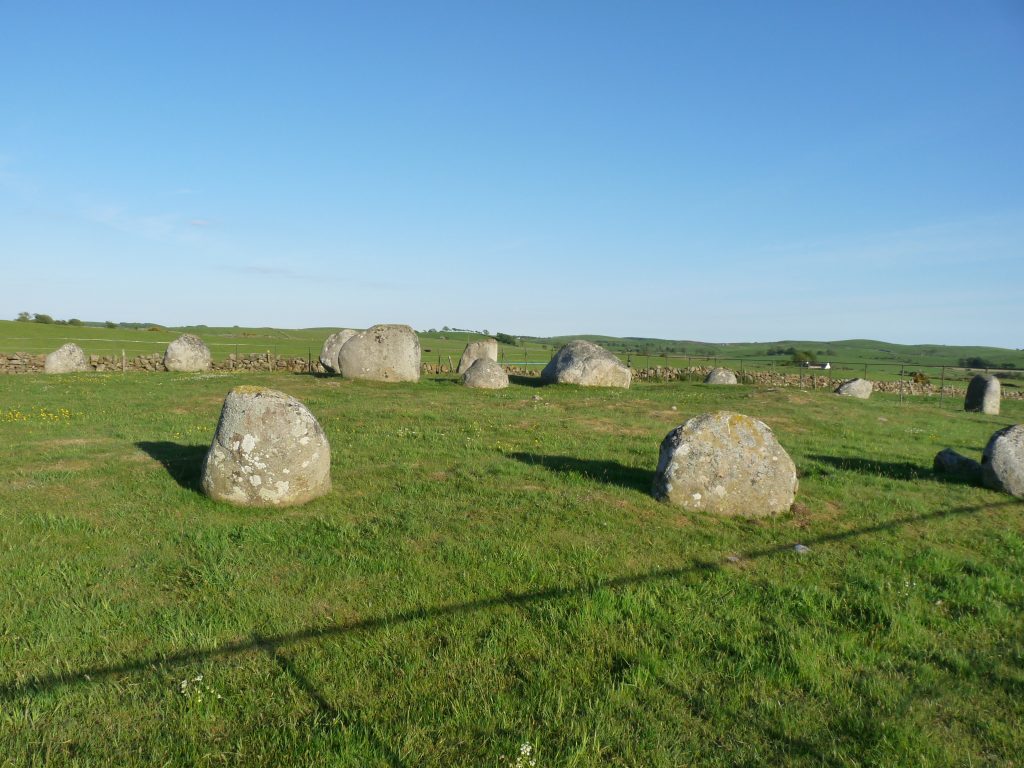
The Machars peninsula is home to a rich concenntration of prehistoric sites, from the Neolithic to the Iron Age. Places to see of note are the Drumtroddan Standing Stones, the ‘ritual mound’ at Droughdool (bordering on the Rhins), the Torhouse Stone Circle (pictured) and promontory forts at locations such as Eggerness and Barsalloch.

Isle of Whithorn
At the tip of the Machars, just a few miles south of Whithorn, visit the charming little former seaport and fishing village of Isle of Whithorn. Walk along the coast in either direction to see the cave associated with St Ninian (c.400 AD) and beyond, and the medieval church and castle ruin at Cruggleton. Easily combine a visit here with one to the vicinity of Garlieston as described above. Early historic sites are numerous in this picturesque part of the world, such as the Iron Age settlement of Rispain Camp. While in the village itself, sample the fine food and drink offered by the renowned Steam Packet Inn. (image credit: Galloway and Southern Ayrshire Biosphere).
Wood of Cree RSPB Nature Reserve
Located on the east bank of the River Cree, and so in the historic county of Kirkcudbright, yet we include it here due to its close proximity to Newton Stewart. The Wood of Cree is the perfect place to get lost for the day – in fact, it’s the largest ancient wood in southern Scotland. In spring, it comes alive with Bluebells on the ground and the sounds of Pied Flycatchers and warblers. It’s also the perfect place to see Willow Tits, as well as Barn and Tawny Owls. It’s a wonderful home for Redstarts, Pied Flycatchers, and Wood Warblers, which all arrive from Africa in May and make the reserve their home for the summer. You can spot up to eight types of bat in the woods, including the rare and secretive Leisler’s Bat. As well as the woodland, there are areas of wood pasture, open moorland, wet floodplain woodland, fen and grassland and scrub, meaning there’s so much wildlife to discover. Each area is home to interesting and unique wildlife like including Black Grouse, Willow Tit, Whinchat, Grasshopper Warbler, and Cuckoo. In the rivers, you may even spot an otter. Admission free: parking, viewpoint, picnic area, information boards, nature trails. (text and image credit: RSPB).