
Castles, Country Houses, & Abbeys (a selection)
Visiting and Viewing Variations
Some castles and tower-houses (there is a degree of overlap between the terms) in the region are maintained ruins, or survive fairly intact, and open to the public, or at least viewable from outside. A half-dozen or so have been renovated and serve as holiday accommodation. Others lie in fields, occasionally on private land, and caution should be exercised (and where relevant, permission sought) in visiting these structures. Four medieval abbeys across Dumfries and Galloway are cared for by Historic Environment Scotland, with remnants of others existing in locations including a parish churchyard and a private garden. Many of the mansion houses, dating mostly from the 18th and 19th centuries, have sadly been demolished in recent times. A good number, however, remain as private residences or hotels, as ruins, with several open to the public at certain times of year. A selection of sites to visit or view is offered below. (image: Caerlaverock Castle).

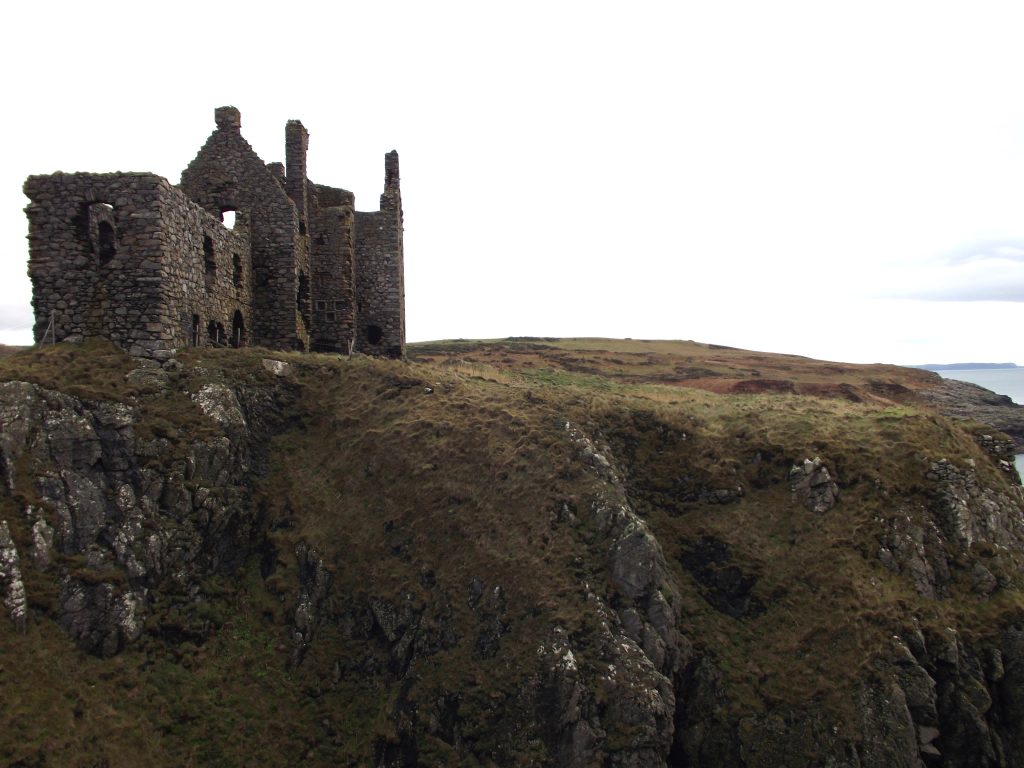
Dunskey Castle (Portpatrick, Wigtownshire)
Spectacularly-sited ruins of a clifftop fortress with magnificent views across the Irish Sea. Reached on foot via a short circular walk from Portpatrick village, currently the castle can only be viewed from the exterior. The Adairs had a fortalice here during the fourteenth century, although the site may have been occupied in previous times. The impressive structure as seen today represents work from the sixteenth and seventeenth centuries, during which time its ownership changed hands on several occasions.
Castle Kennedy and Gardens (near Stranraer, Wigtownshire)
The picturesque shell of an early seventeenth-century prototype mansion (not entirely lacking defensive measures) built by the Kennedys. Following a destructive fire of 1716, the structure was retained as the chief ‘ornament’ of outstanding gardens first laid out by William Adam. The castle is only viewable from outside in visiting the magnificent Castle Kennedy Gardens.
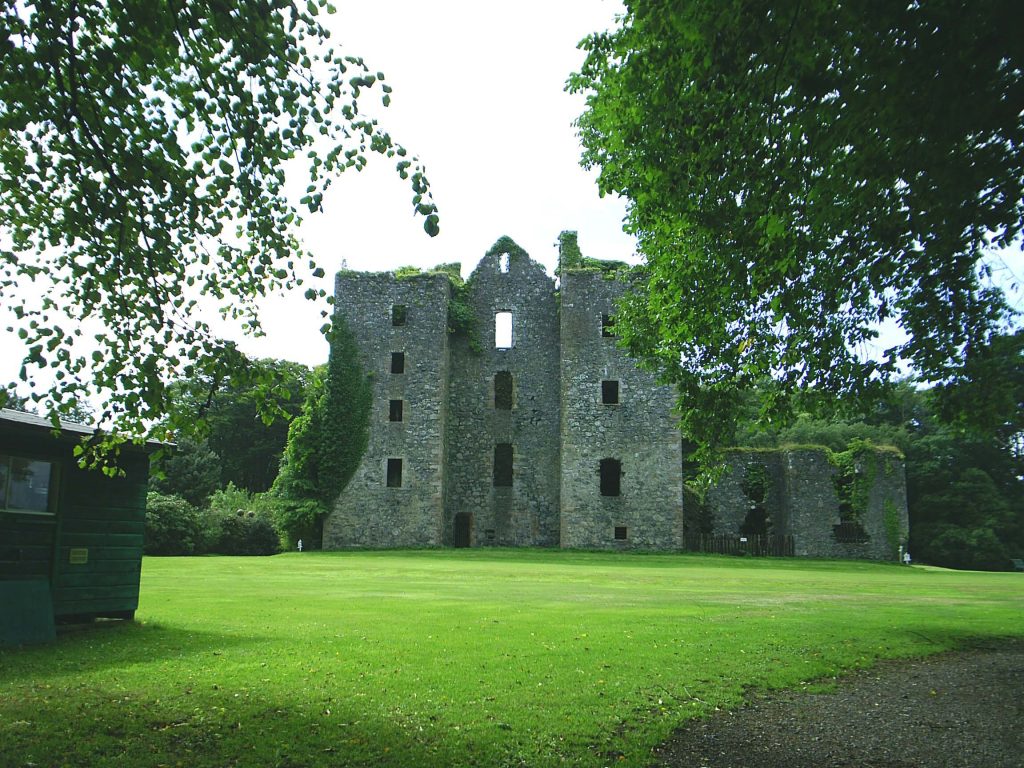

MacLellan’s Castle (Kirkcudbright)
In the centre of Kirkcudbright, sits the substantial remains of an elongated tower-house (or early townhouse) built by Sir Thomas MacLellan, Lord Provost of the burgh, in the late 1500s. The castle is cared for by Historic Environment Scotland, and is currently opened April-October. Only the ground floor is presently accessible (admission free).
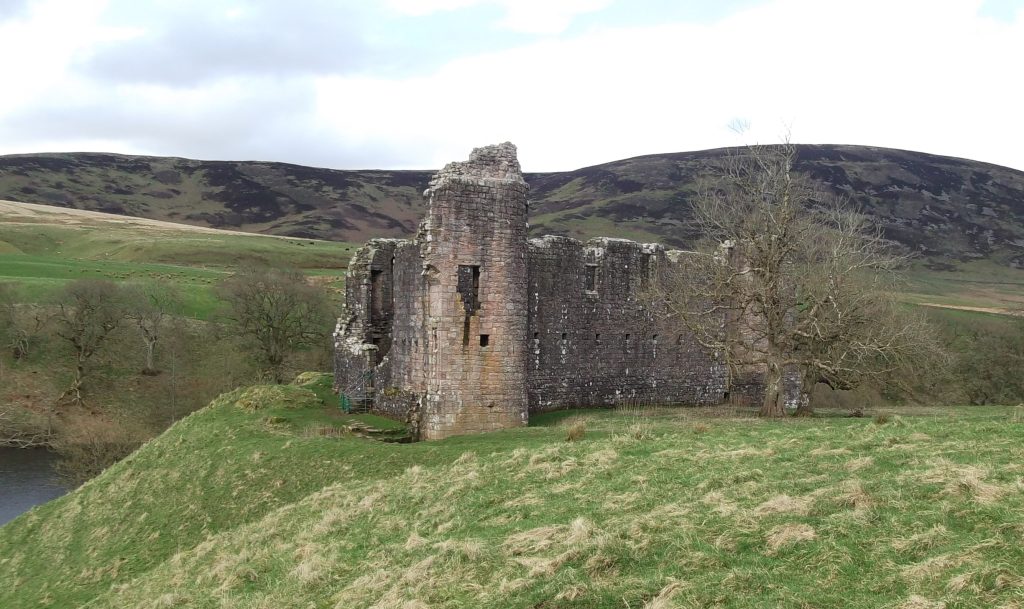
Morton Castle (near Thornhill, Dumfriesshire)
In a scenic and remote location, sited on a triangular spur of land, the exact chronology of this hall-house castle (with remains of a gatehouse and defensive towers protecting the level approach) is debated. It eventually came into the possession of the Douglases of Drumlanrig (see below: Drumlanrig Castle) and in 1588 was burned by the troops of King James VI engaged in putting down a rebellion in the south west. Another site maintained by Historic Environment Scotland, Morton Castle is free to visit any time of day, all year round.
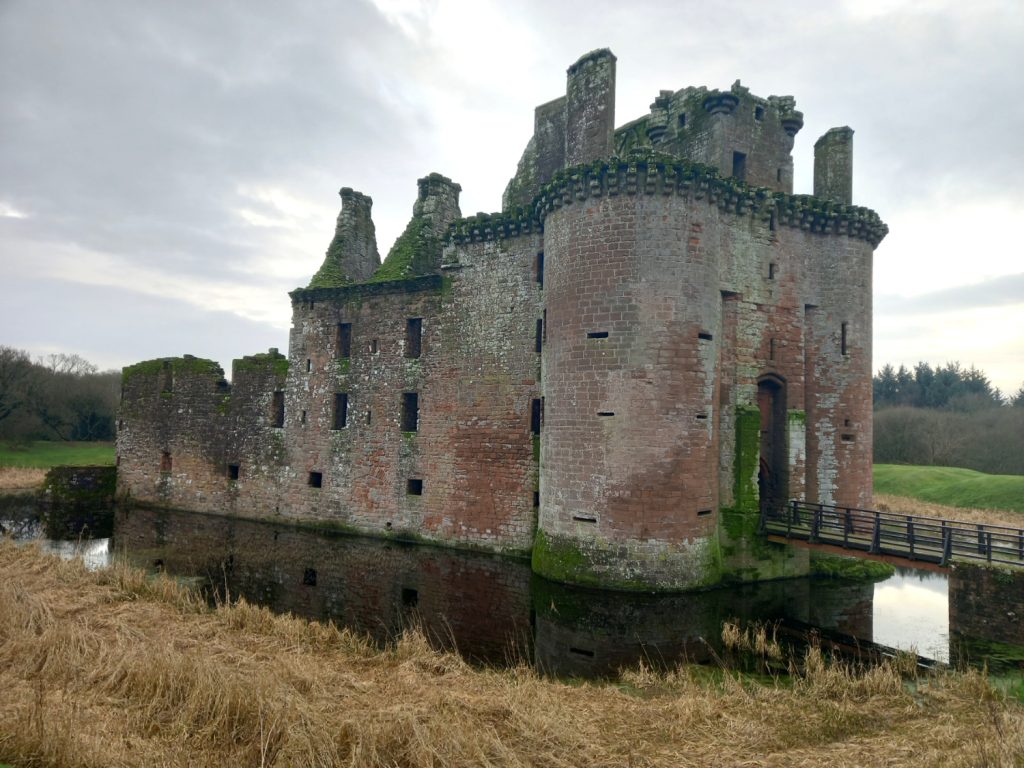
Caerlaverock Castle (near Dumfries)
This moated and uniquely-shaped triangular medieval fortress was the principal seat of the mighty Maxwell family from the thirteenth to the seventeenth century. Over the course of that time, it was the scene of epic sieges relating to Anglo-Scottish and civil wars – the last of which resulted in its present ruined condition. Within its courtyard is the remarkable Renaissance Nithsdale Lodging, built in the 1630s by Robert Maxwell, 1st Earl of Nithsdale. Around the castle are earthworks representing the 1640 civil war siege, while in woods a short distance away (nearer the Solway) are traces of a predecessor castle (the ‘first’ Caerlaverock). Historic Environment Scotland maintain the site, which is open throughout the year (admission charges).
Sweetheart Abbey (New Abbey)
Situated 6 miles south of Dumfries, the picturesque village of New Abbey is home to the impressive remains of the thirteenth-century Cistercian ‘Sweetheart Abbey’, founded by Lady Devorguilla of Galloway in memory of her husband, Lord John Balliol. The village also contains an eighteenth-century corn mill, with walking alternatives including a long trek to the summit of Criffel, or a shorter one up to the Waterloo Monument. Currently there are access restrictions to some parts of the abbey interior owing to high-level masonry inspections.

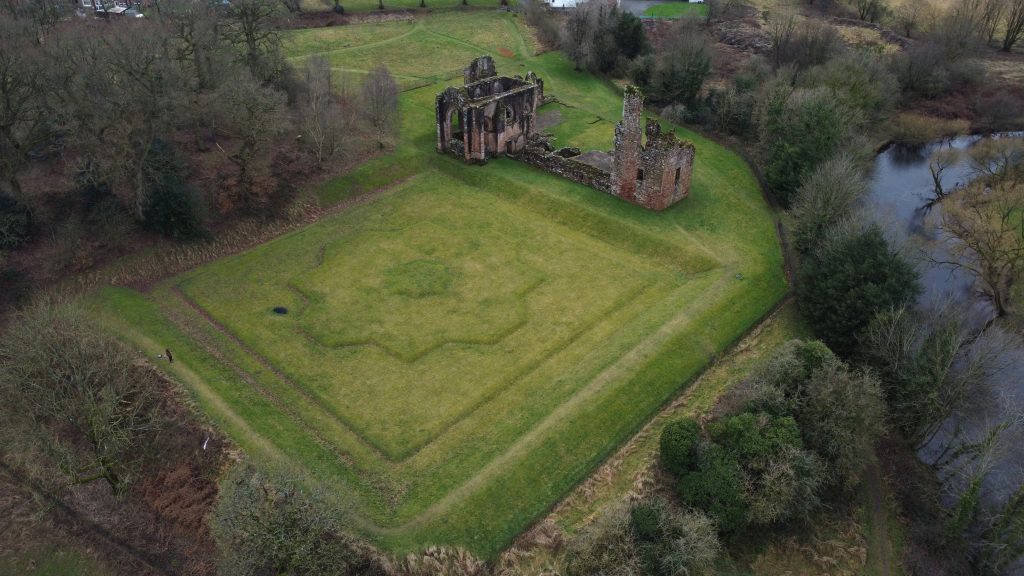
Lincluden Abbey & Renaissance Garden (Dumfries)
Correctly titled ‘Collegiate Church’, Lincluden began life as an earth-and-timber castle (a now tree-covered ‘motte’ mound) quickly supplemented with a Benedictine nunnery – all before c.1200. Some two centuries later, the same Archibald ‘the Grim’ Douglas, Lord of Galloway, who built Threave Castle founded the collegiate church as seen today, staffed by churchmen who were to pray for the souls of his family and descendants. The interior contains an ornate monumental tomb designed for Archibald’s wife Princess Margaret, Lady of Galloway, who died in 1450. Following the Reformation, part of the building was converted into a secular residence incorporating a tower-house with gunloops for security. A fine Renaissance garden sits alongside. The site is maintained by Historic Environment Scotland, open all year, admission free.
Dundrennan Abbey (near Kirkcudbright)
Visit the impressive and charming remains of this medieval Cistercian abbey, founded for a community of monks in the twelfth century. View the stone effigy of a murdered abbot, with his executed assassin at his feet. Mary Queen of Scots spent her last hours in Scotland here in May 1568, following the defeat of her forces at the Battle of Langside before departing across the Solway at nearby Port Mary (a beach named in her honour) to exile, imprisonment, and eventual execution in England. Dundrennan Abbey is another monument cared for by Historic Environment Scotland. Open April-September (admission charges).

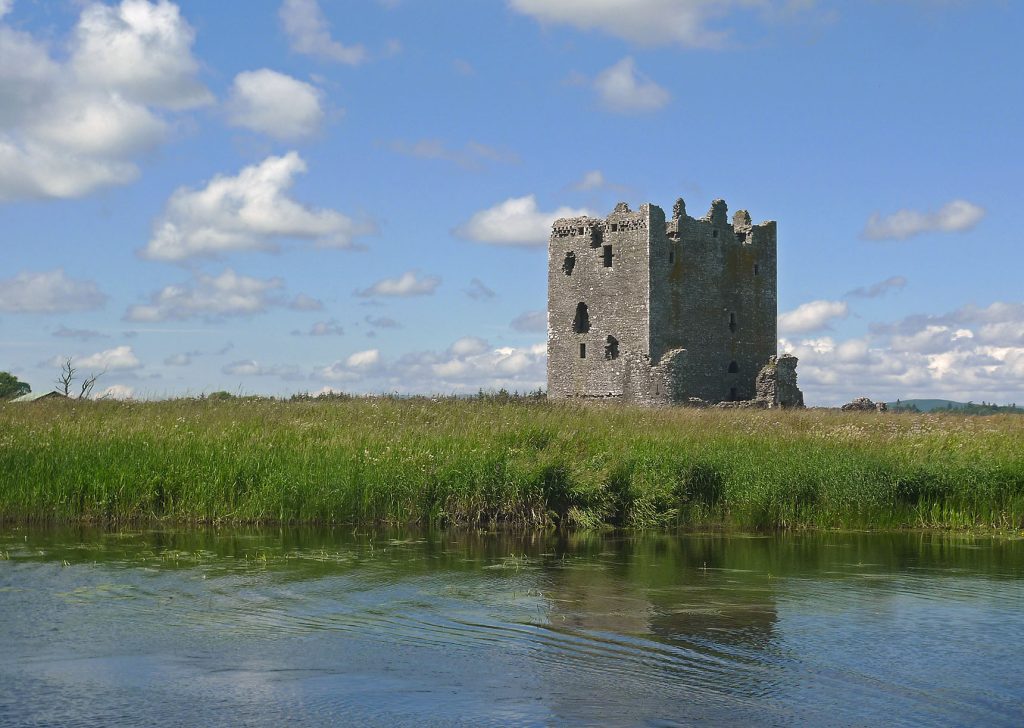
Threave Castle (near Castle Douglas)
This huge and forbidding tower-house, on an island in the River Dee, was built by the aptly-named Archibald ‘the Grim’ in the late-fourteenth century – although the history of the site almost certainly goes back much further. Archibald was a leading member of the powerful Douglas family, principal figures in the fight against England during the Scottish Wars of Independence – but whose strength and influence grew to the extent that they were deemed a threat to the Scottish Crown. Eventually, in 1455, as part of his campaign to suppress the ‘Black Douglases’, King James II of Scots laid siege to the castle here for three months, capturing and retaining it as a royal possession. Two centuries on, in 1640, as at Caerlaverock the Maxwells defended Threave for King Charles I against the Covenanter forces of the Scottish Parliament. Around the base of the massive tower are remains of a fifteenth-century artillery fortification. HES maintain the castle, which can be visited from April 2026 following a long period of closure. The island is reached by boat from a small jetty across the river. A pleasant and scenic half-mile walk from the NTS nature reserve carpark is required to reach this point in the first place. Admission charges.
Drumlanrig Castle and Estate (Thornhill, Dumfriesshire)
A current seat of the Duke and Duchess of Buccleuch and Queensberry, this seventeenth-century Renaissance ‘palace’ was built on the site of a previous castle, being another place in the region long associated with the Douglases. Situated in an idyllic location within the Drumlanrig estate, on the west bank of the River Nith, and with 40 acres of adjoining gardens, the interior of the castle moreover boasts exquisitely-furnished rooms and an important art collection. Guided tours are available at set times from April to December (admission charges) – with free access to the estate, which includes several walk options, available 365 days of the year. Cafés, parking, and adventure playground on site (seasonal opening).

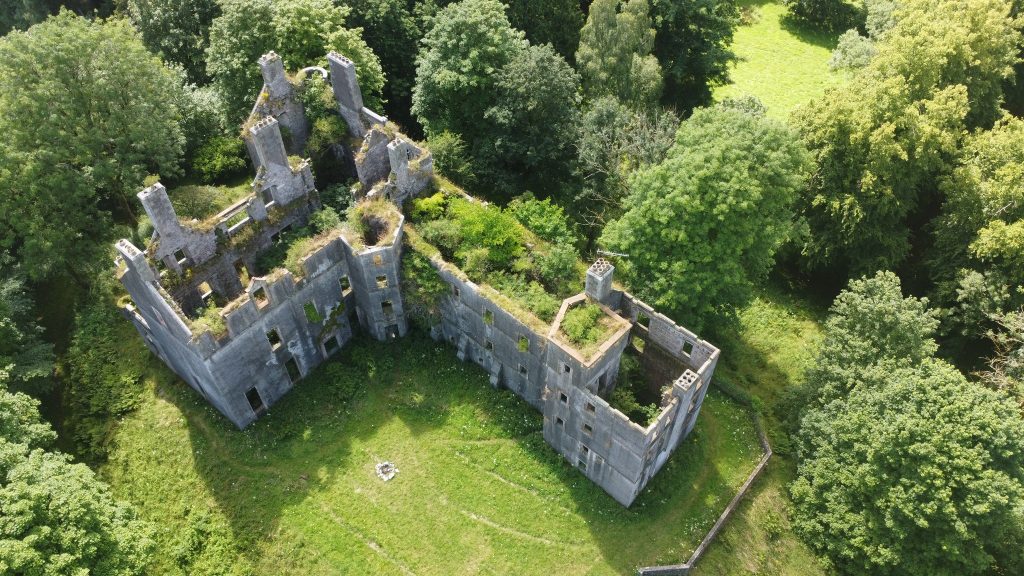
Kenmure Castle (New Galloway, Kirkcudbrightshire)
Dramatically sited above the head of Loch Ken, stands the huge and gaunt shell of this composite historic house incorporating a sixteenth-century tower – all raised upon the mound of a now-vanished medieval fortress. Kenmure has all the aspects of a ‘lost’ mansion, including traces of extensive former gardens, an overgrown tree-lined entrance avenue, plus other features. It was for centuries the home of the Gordons of Kenmure, of whom perhaps the best known was William Gordon, 6th Viscount Kenmure, beheaded on Tower Hill (London) for his participation in the Jacobite Rebellion of 1715-16. The ruins of the castle are in a perilous condition and should not be entered (interior stairways and other sections have recently collapsed). Limited parking at small lay-bys on the A762, or arrive on foot from New Galloway – caution advised in walking along the road. Thereafter a style marks the beginning of the former avenue approach.
Lochmaben Castles & Walk (near Dumfries)
Today’s relatively small town of Lochmaben has a proud history – not least in being the place where the ‘first’ Robert the Bruce, ancestor of the Bruce of Battle of Bannockburn f(1314) fame, first settled in Scotland in 1124. A huge ‘motte’ earthwork, now within a golf course, marks the site of the first castle. But a pleasant lochside walk (or short drive) two miles south leads to the ruins of a larger fortress much fought over between Scots and English (and sometimes between Scots among themselves) across three centuries. Currently, this ‘second’ Lochmaben Castle is fenced-off while maintenance work is undertaken by HES. However it can viewed from immediately outside, has information boards, a parking area, plus a picnic spot overlooking Castle Loch. A circular walk from the town is detailed in a link below.

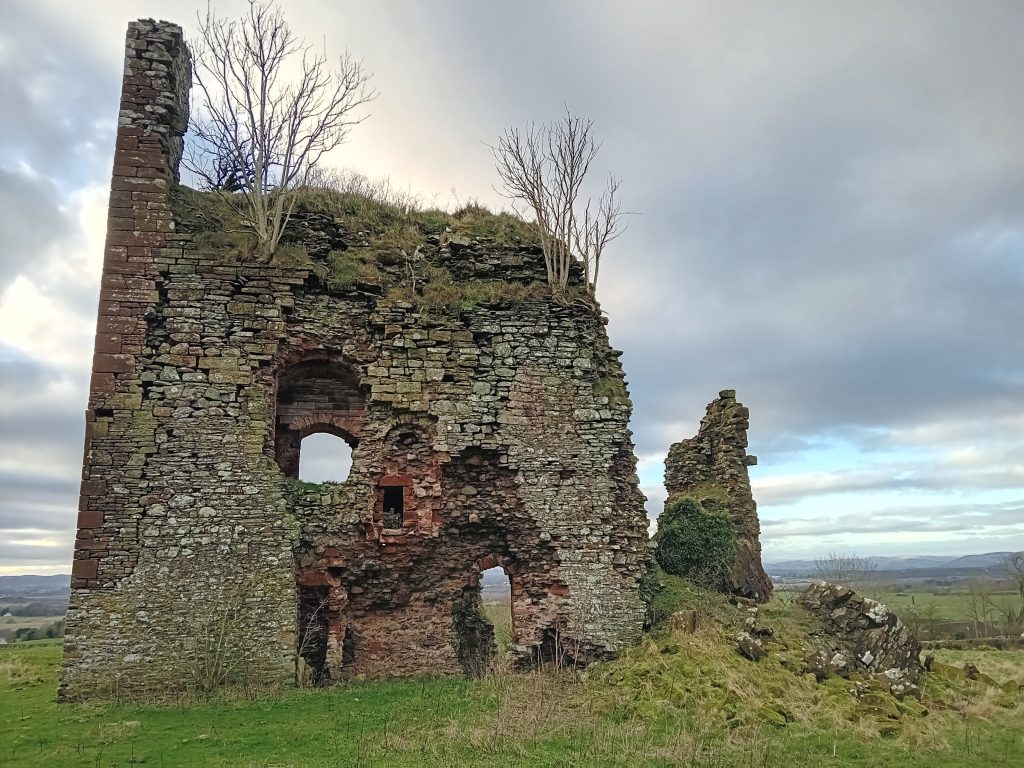
Torthorwald Castle, Kirk & Cruck Cottage Heritage Centre (near Dumfries)
In the little village of Torthorwald – formerly a medieval ‘burgh of barony’ – an exploration of the shattered remains of the important multi-period medieval castle can be combined with a walk along to the historic kirk and kirkyard, plus a visit to the nearby authentic 18th-century cruck-framed cottage. Last remaining example in the south of Scotland of a once common building type, the little structure is now cared for by volunteers, with exhibits on rural history, folklore, and traditions. The cottage is open year round for guided and group visits – while at all times a key holder list can be found in the window, and one of the friendly neighbours will let you in. Throughout the main season (April to September) it opens at least once a month for special events, hosting a programme of evening activities and talks. Details can be found on the website.
Gilnockie Tower & Clan Armstrong Centre (near Canonbie)
The reputation of this tower, just on the Scottish side of the border in a lawless area once known as the ‘Debatable Lands, owes much to a fame that surpasses its modest size. Notably so as having been the home of the celebrated (if for many people during his era, ‘notorious’) sixteenth-century Border Reiver, Johnnie Armstrong – eventually executed by King James V of Scotland following a treacherous ploy. Gilnockie, the world centre of the ‘Clan Armstrong’ (even Neil Armstrong, the first man on the moon paid a visit) houses exhibits on the Reivers and wider Armstrong history. Open April to October, admission charge. (image credit: Gilnockie Tower).

Orchardton Tower (near Castle Douglas)
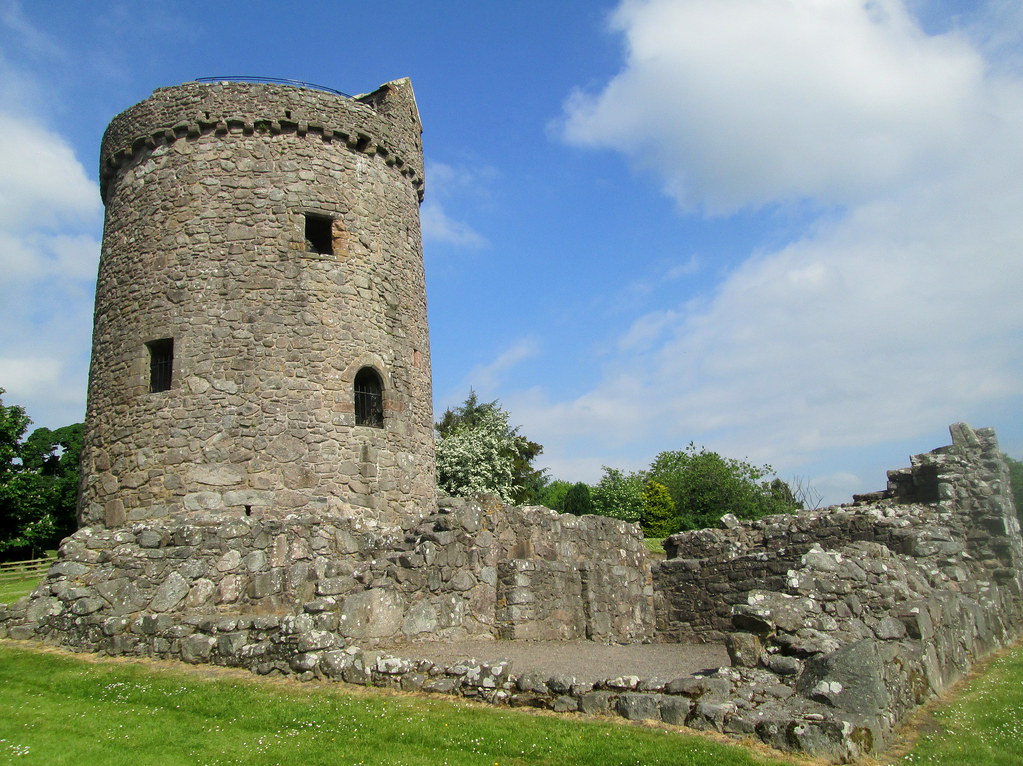
Near the small village and former port of Palnackie, Orchardton Tower is an unusual free-standing round towerhouse, the only one of its kind in Scotland. It operated as a fortified residence for a minor nobleman named John Cairns, who may have acquired the land after James II’s overthrow of the Douglases in 1455. Opened all year round (closed Thursday and Friday between October and March), admission free.
Drumcoltran Tower (near Dumfries)
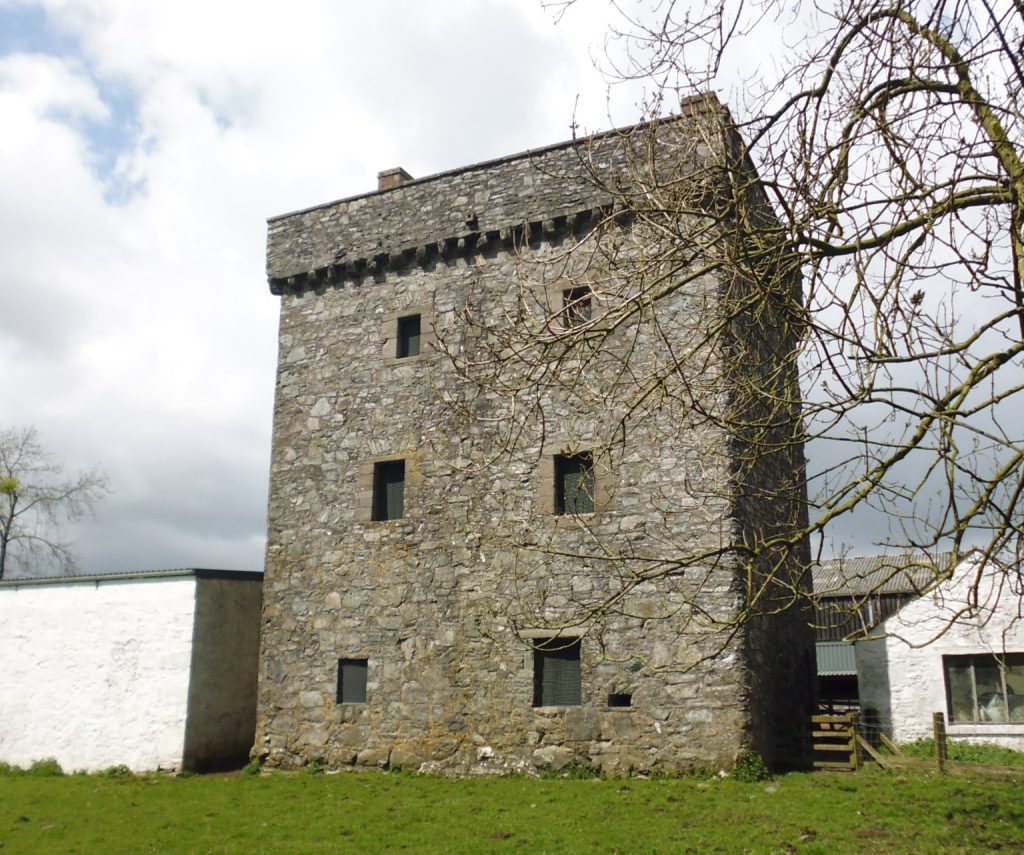
Situated approximately halfway between Dalbeattie and Dumfries, reached by minor roads from the A711, this intact late-16th century L-plan towerhouse was built by a local branch of the regionally powerful Maxwell family. The tower consists of three storeys and a garret, with a corbelled parapet at the top. Unusually, its corners are rounded and not angled. Drumcoltran’s austere appearance is reflected by a platitude inscribed on a stone panel above its front entrance. Translated, it reads: ‘Keep hidden what is secret, speak little, be truthful, avoid wine, remember death, be merciful’. Maintained by Historic Environment Scotland, Drumcoltran Tower is free to visit and open year-round. (information from HES).
Cardoness Castle (Gatehouse of Fleet)
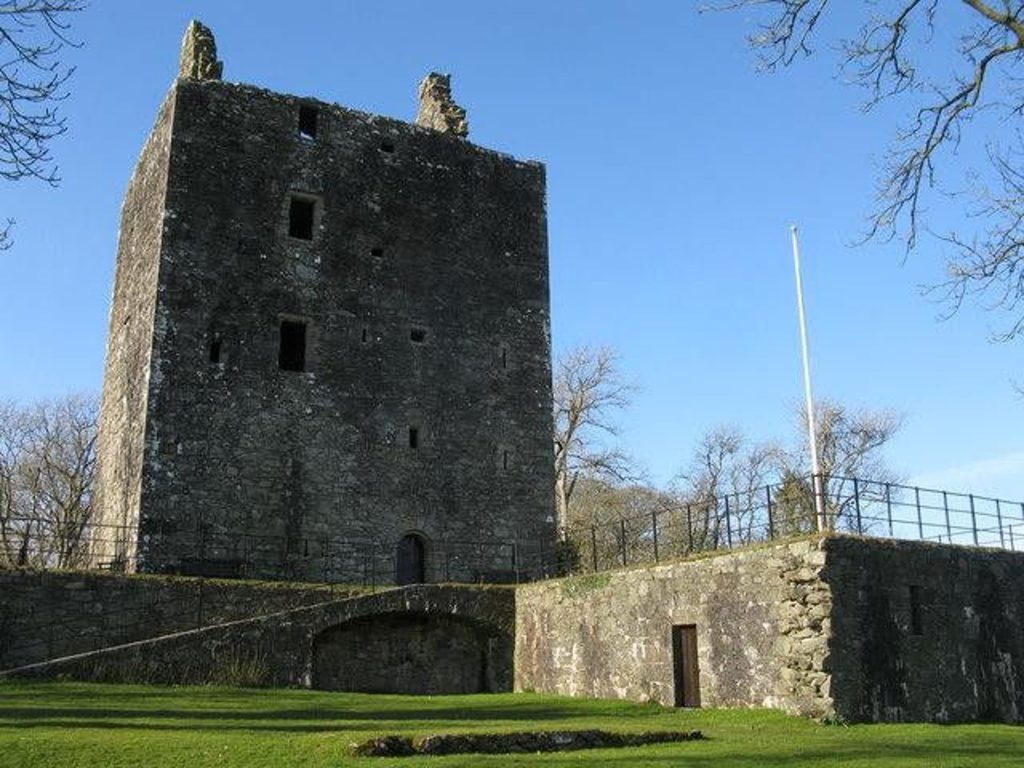
Easily seen from the A75, just west of Gatehouse of Fleet, Cardoness Castle was built in the later 1400s as the fortified residence of the McCullochs, and is a fine example of a Scottish tower-house. Combine a visit here with a wider one to the charming Gatehouse of Fleet itself, and sample the delightful walks around the verdant Cally Estate – or the more challenging trek up Trusty’s Hill to the Rutherford monument (in passing the remains of a vitrified Pictish fort) with its fine views across Wigtown Bay to the Machars. The interior of the castle is currently closed, but the grounds and visitor centre are free to visit Thursday to Saturday (10am-4pm) between April and September.