
‘The Romance of Ruins’ (selected sites)
Milkbank House (near Lockerbie)
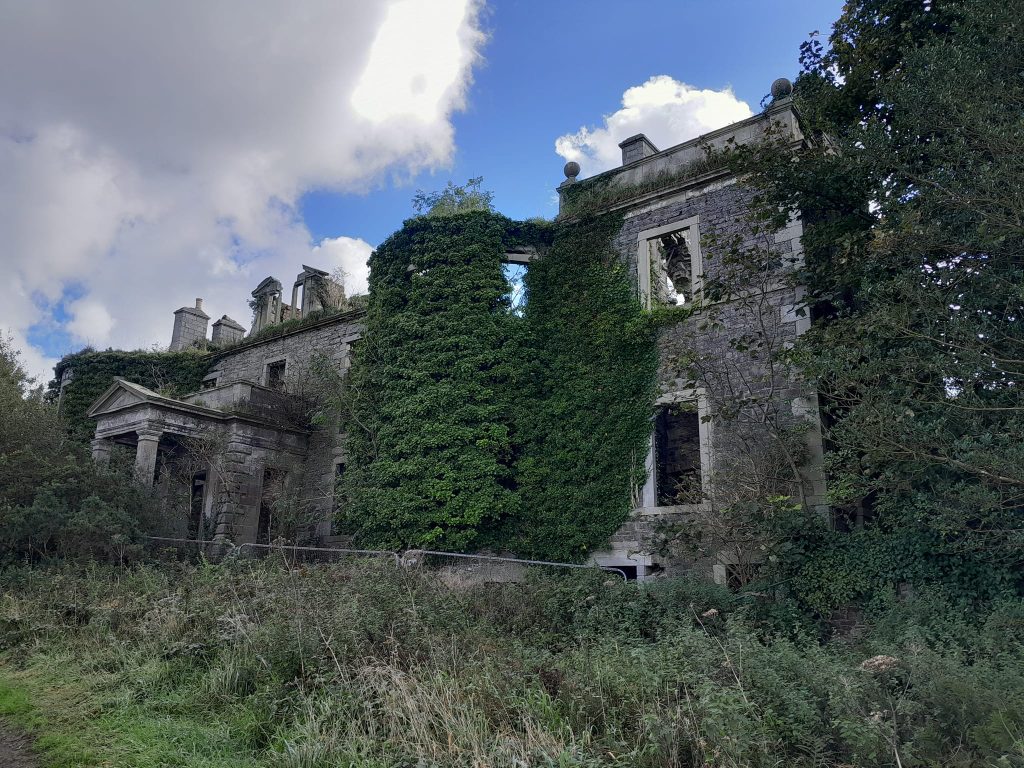
The huge overgrown shell of this nineteenth-century mansion, built by the Bell-Irvings (a marriage alliance between two local families of long and distinguished pedigree) sits alongside the Annandale Way. While the interior of the building is not safe to enter, it makes for an impressive site to view in passing by. Limited parking within a half-mile of the ruin, thereafter walk along the path (muddy and puddled in wet weather as the image shows!).

Barnbarroch House (near Wigtown)
Another neglected and ruined mansion in a precarious condition, Barnbarroch House dates from the later-eighteenth century, though was built on the site of an earlier castle. The family who lived here for a half-millennium and more were the Vans (‘of Barnbarroch’), members of whom were still in residence when a fire gutted the building during World War Two (resulting in the tragic death of the Lady of the house, Ada Vans Agnew). A pleasant walk from the entrance to the estate just outside Whauphill village (limited parking) leads to the impressive, if somewhat sad, structure. The interior is in a state of collapse, and the building is only safe to view from the adjacent track.
Gelston Castle (near Castle Douglas)
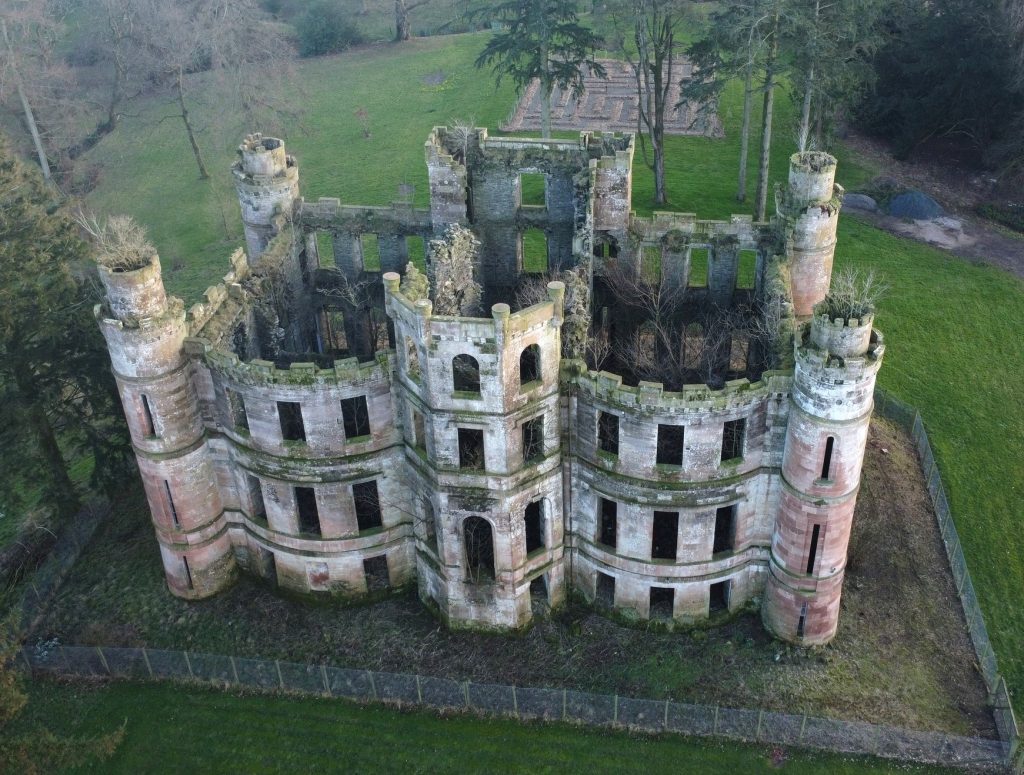
The name Gelston is of medieval origin, testifying to a twelfth-century Anglo-Norman knightly settler (whose arrival, as elsewhere in Dumfries and Galloway, the locals did not exactly welcome) – his nearby original fortalice being now represented by only an earthen ‘motte’ mound. The ‘castle’ we see today, again a country house surviving as a huge floorless shell, was in fact built around 1800 by Sir William Douglas, who founded the nearby ‘new town’ of Castle Douglas. The mansion now lies within the managed Gelston estate of ‘Gelston Castle Holidays’ (which includes self-catering cottages available in the immediate vicinity), and is passed by a designated path through woodland which begins at the named village (limited parking at village hall). Once more, here the ruins are fenced-off on safety grounds.
Kenmure Castle (near New Galloway)
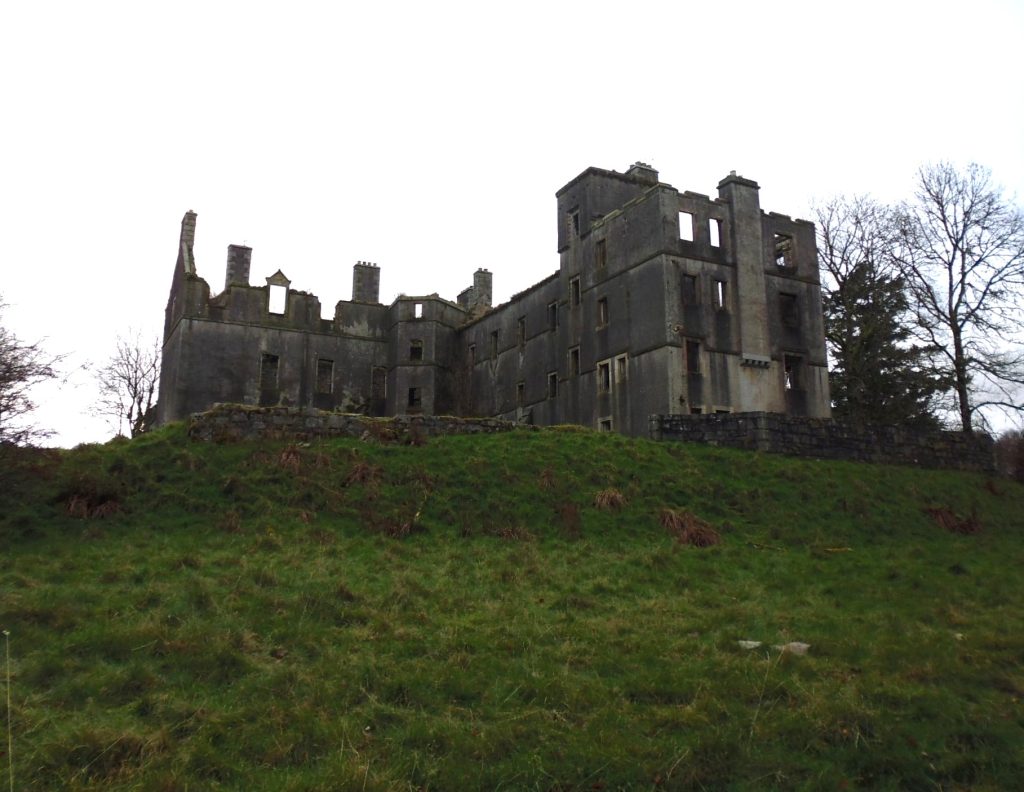
Contended as a possible seat of the Lords of Galloway and birthplace of John Balliol (King of Scots between 1292-96) the large and gaunt remains of Kenmure Castle as seen today represent structures dating from c.1600-1900, erected upon the huge mound of the original fortress. The site is an impressive spot north of Loch Ken and – the scale of the building apart – its former grandeur is further attested by remains of extensive gardens and other features. The castle has been a possession of the locally powerful Gordon family for over 700 years, perhaps the most celebrated of whom was William Gordon, 6th Viscount of Kenmure, executed at Tower Hill London in 1716 for the prominent part he had played in the ’15 Jacobite Rebellion. Limited parking at the small lay-by on the A762 road one mile south of New Galloway, from where a stile gives access to the tree-lined (now overgrown) avenue leading to the castle – otherwise park in (or a take bus to) New Galloway and walk carefully along the road. View the castle from outside, as again inside the building is in a dangerous condition.