
Long-distance Trails & Hill Walking
Rhins of Galloway Coastal Path
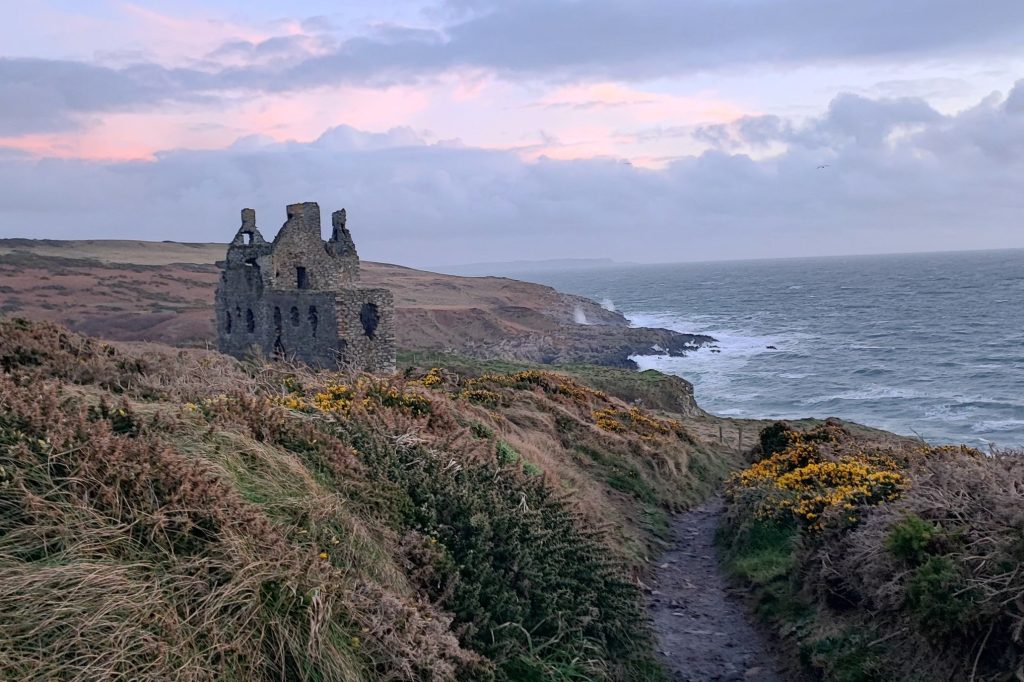
This 83-mile circular walking route incorporates part of the the Mull of Galloway Trail, plus can be divided into six sections each with its own guide produced by the ranger team (see first link). Still shorter walks of a few miles along the ‘RGCP’ are another option. For an example of the former, begin at the picturesque village and harbour of Portpatrick, then follow the dramatic coastal route, past historic sites such as Dunskey Castle (pictured: image credit Becky Jones) until arriving at Port Logan – all in all a fairly challenging trek of over 15 miles. As public transport in this part of the region to return to your point of departure is limited, one of the stimulating shorter treks may be a better option – the Portpatrick circular, for example, is only 4 miles.
Annandale Way & Devil’s Beef Tub
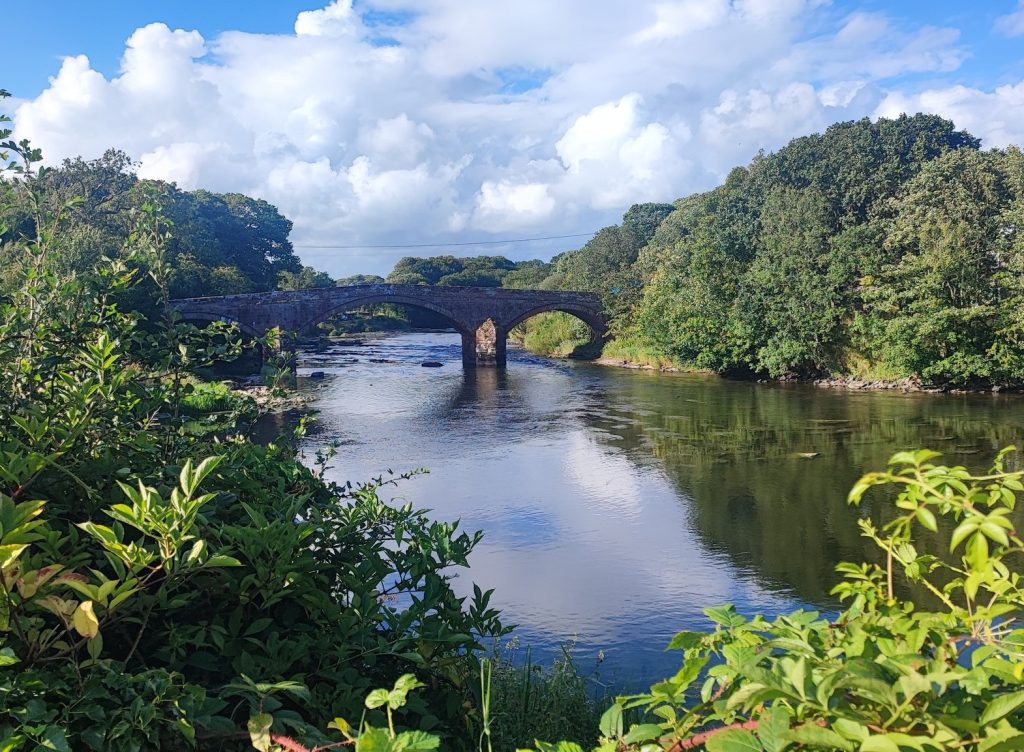
At the eastern end of the region, follow along and around the course of the River Annan from its source at the ‘Devil’s Beef Tub’ north of the charming town of Moffat, walking through woodland, across hills, in passing by quaint villages and historic places of interest, before finally arriving at the Solway Firth south of Annan. As with the other major trails, the 56-mile route can be divided into main sections or shorter walks. The circular Devil’s Beef Tub trek north of Moffat may be challenging to less experienced walkers. Places to see along the Annandale Way – which has alternative routes between Moffat and Hoddom – include Lochmaben Castle, Hoddom Castle, and Milkbank House. (image: Brydekirk Bridge across the River Annan – credit Becky Jones).
Walking Festivals
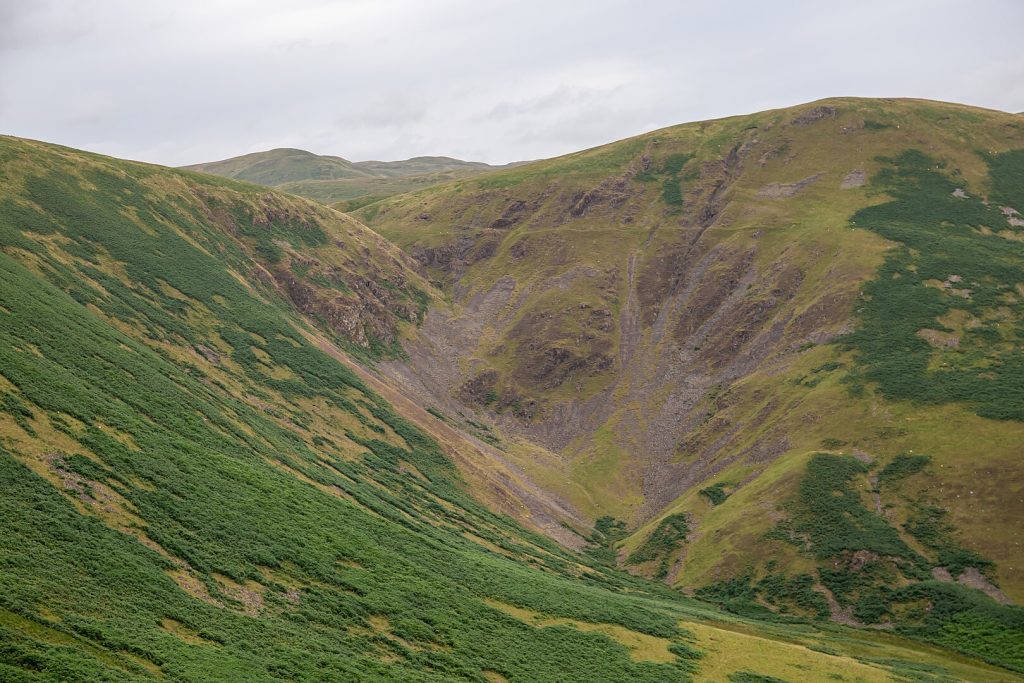
Annual walking festivals take place at Newton Stewart and Moffat – usually in May and September respectively. The walking events explore unspoilt landscapes, with a wide variety of routes to enjoy. Each year offers a programme of numerous options, graded according to ease (or difficulty) – with transport to point of departure and guides included, as well as evening social events. Booking and walk fees. Information on the two festivals is available via the links below. (image: Devil’s Beef Tub, north of Moffat).
Southern Upland Way
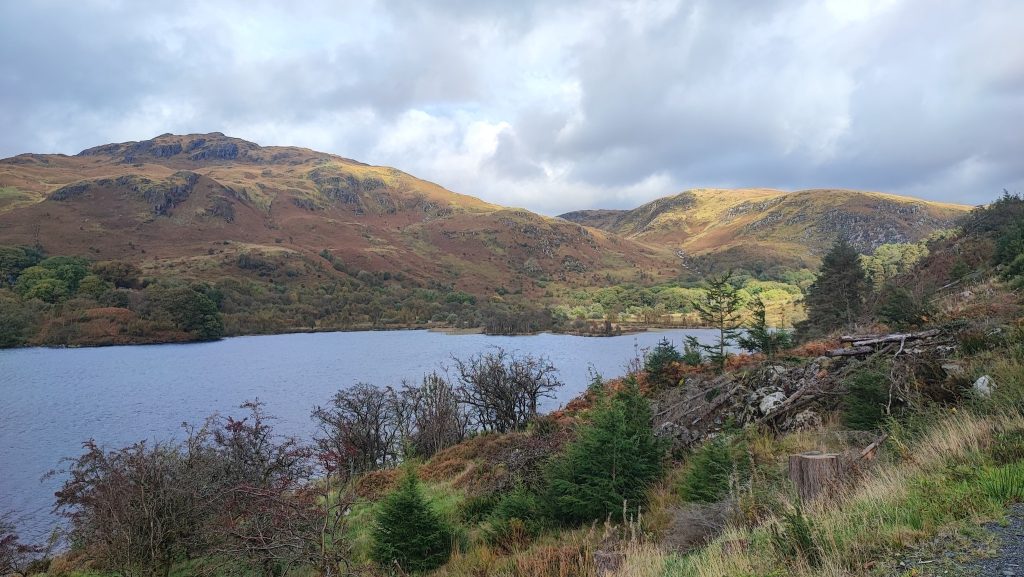
The Southern Upland Way is a 214-mile, national coast to coast, route – with what amounts to its western and central portions traversing the varying but always beautiful countryside of Dumfries and Galloway. The route begins at the scenic village-harbour of Portpatrick, moves north, then takes the explorer across wild and rugged landscapes, linked by small towns and villages. The Southern Upland Way is especially suitable for division into daily walks – whether its principal sections (though some of these can be very challenging in themselves) or shorter stretches of these. (image Glen Trool and Loch Trool).
The Galloway Hills
The Galloway Hills offer a wealth of opportunity to enjoy the peace and tranquillity of undulating hills, countless lochs, picturesque burns and waterfalls, and an abundance of plants, bird and animal life.
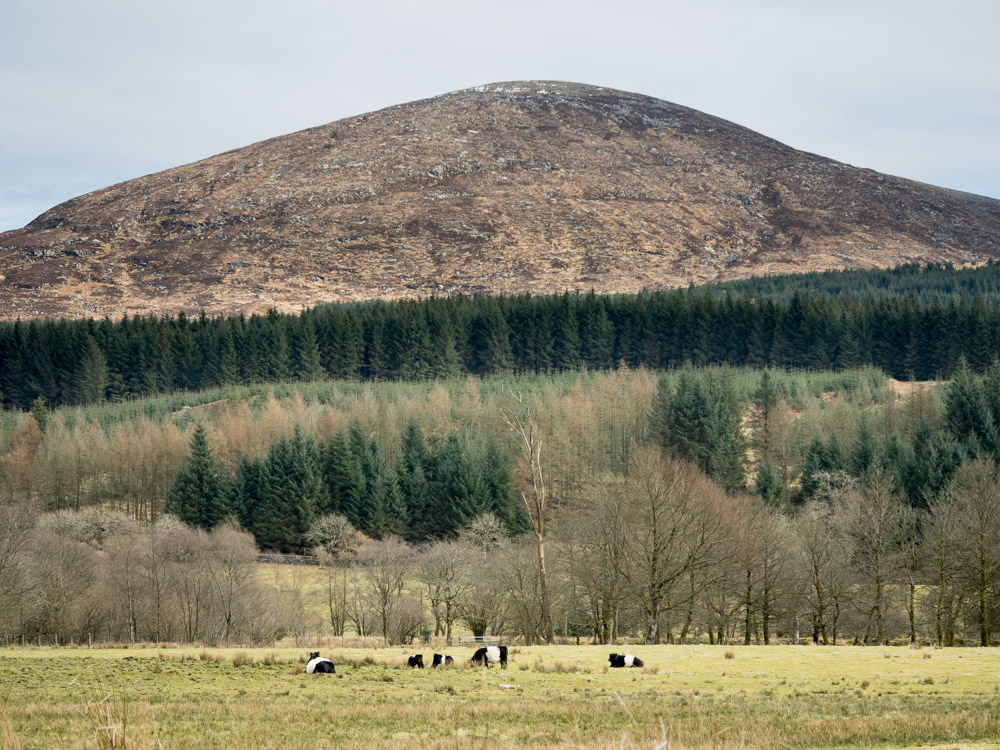
The walker has a choice of over 40 summits of 2,000 feet or more, many presenting quite a challenge. Lesser hills and forest trails meanwhile offer a more leisurely alternative, but with again ample opportunity to appreciate the beauty of magnificent scenery and varied wildlife. (image: Cairnsmore of Fleet, near Newton Stewart).
The Galloway Hills form part of the Southern Uplands but are generally contained in a fairly compact arrangement of six distinct groups. (information text from Newton Stewart WalkFest). A guidebook (of which there are numerous) and planning is advised before undertaking any journey into the Galloway Hills.
The Whithorn Way
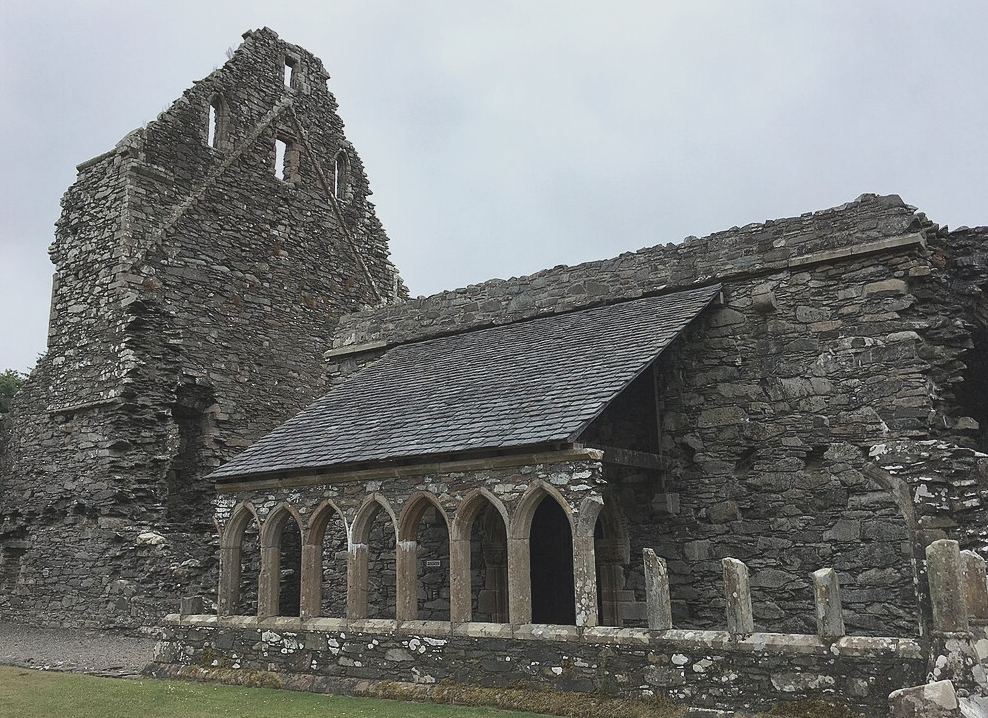
Inspired by the memory of St Ninian (c.360-432 AD) Christian saint and alleged miracle worker, and possibly the first Christian missionary to Scotland, the 143-mile Whithorn Way counts approximately one third of its length – and ultimately its final pilgrimage destination – in Galloway. For the beginning of the D&G section, commence at Barrhill (just beyond the regional boundary – served by bus and train) then travel south across rolling countryside via New Luce and Mochrum, passing historic sites – Christian and non-Christian – such as Glenluce Abbey (pictured) and the Drumtroddan Standing Stones, before arriving in the ancient town of Whithorn itself. Once there, visit the attractions maintained by the Whithorn Trust. The Way can be explored by section, or shorter walks.